Using Beacons on Buses

Some of the first uses of beacons was on buses. For example, in 2015 in London, 500 buses sent targeted in-app messages to passengers. It didn’t work, Proxama ceased to be in business and thankfully the use of beacons for spamming went away. Today, the use of beacons has matured as has their use on buses.

There’s a useful presentation by Texas A&M Transportation Institute and Houston METRO on Bus Stop Beacons: Transit Wayfinding for People with Visual Impairments (pdf). They classify accessibility challenges as locating stops, knowing which routes serve stops, obtaining real-time information and boarding the vehicle. They conclude that multiple location sources, using Bluetooth with GPS, work better than a single source alone. Also, sound shouldn’t be the only way riders receive information from an app because noisy environments make listening difficult. Vibrations can be used to provide additional notifications.
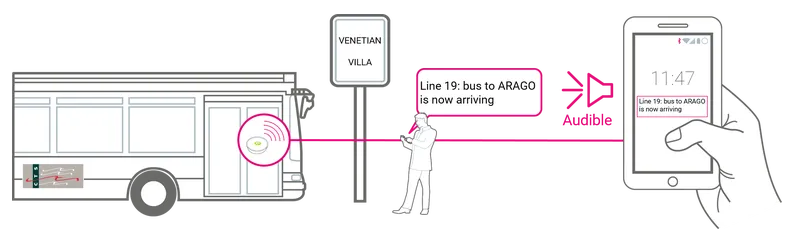
There are insights from Connecthings/CTS in Strasbourg on helping the blind catch the right bus. There’s also guidance in In–Vehicle Positioning for Public Transit Using BLE Beacons that shows locating a passenger to at least 1 meter across the length of the bus vehicle is possible using Bluetooth beacons. This can be used to assess crowding.
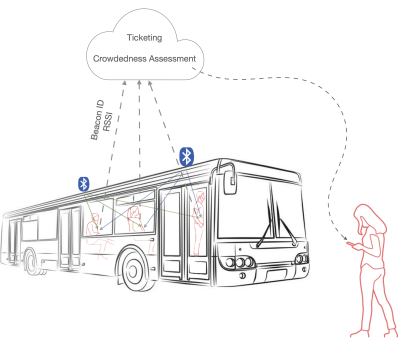
The current state of the art is using beacons with ticketless payment and automatic boarding and un-boarding detection. The pioneer in this area is one of our consultancy clients, UrbanThings, who has an article on Increase ridership through mobile ticketing and case studies.

Another one of our customers, Lothian buses, uses beacons to aid accessibility:

Next Stop Announcements: when on a bus, the customer can select which bus route they are on and the app will announce the name of the next stop as the bus approaches (with buses fitted with Bluetooth beacons, the customer doesn’t even need to select which bus route they are on – the app knows automatically)

Read about Beacons in Transportation
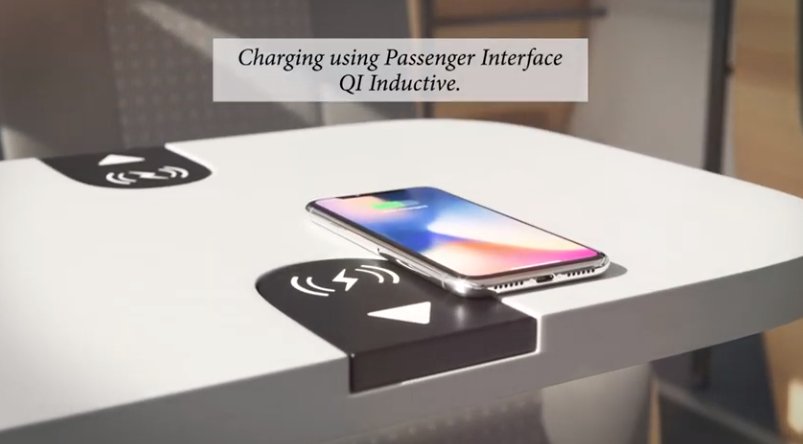
Rail Technology iBeacon Charging System

The April/May issue of Rail Technology Magazine mentions a new train passenger phone charging system that uses iBeacon:

The system created by EAO, uses iBeacon to automatically open train operators’ apps on the passengers’ smartphones. Passenger apps can provide tailored passenger information such as smart ticketing, trolley service requests and deliver targeted marketing messages.

Read about Beacons in Transportation
Beacon Triggered Rail Passenger Interfaces Entering Service

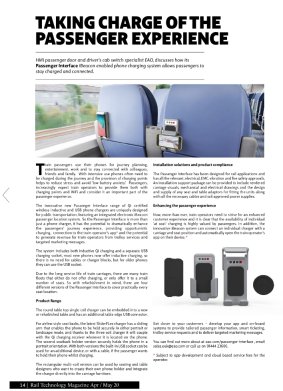
We previously mentioned EAO’s rail passenger interface. Railstaff has further news that the UK’s South Western Railway will include the system in refurbished Class 444 trains in November.

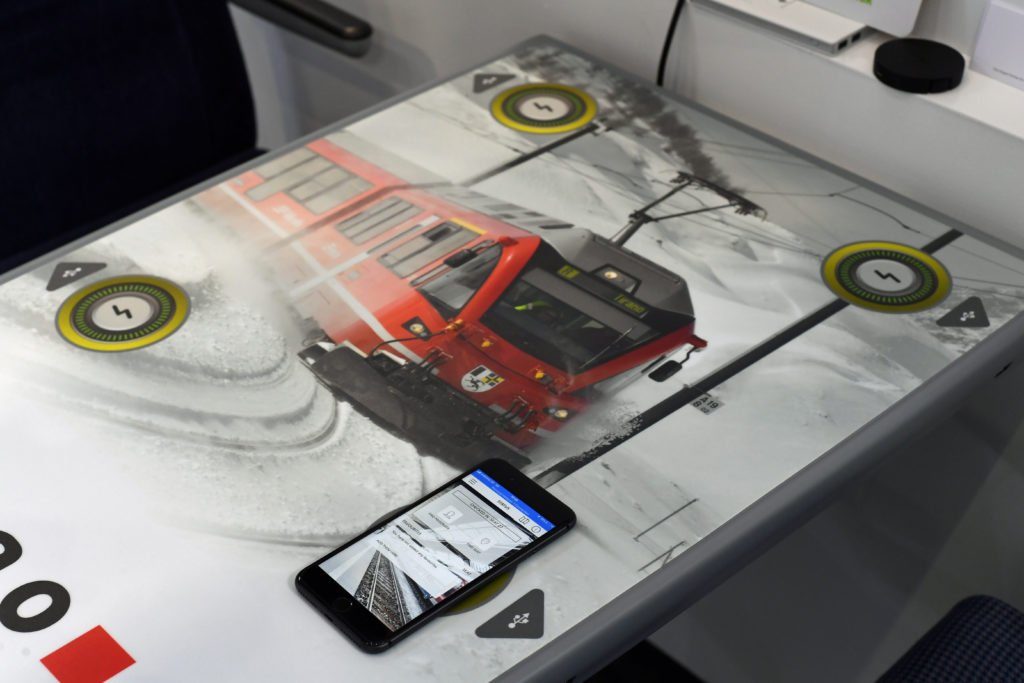
The wireless charging works with an app that can signal the seat is occupied and prompt the user to open the app.

“Ticket inspectors can then be informed if the passenger has a ticket while passengers would be able to order food and drink to their seat if there’s an onboard catering service. There are also options to provide tailored passenger information.”

EAO is also working with Eversholt Rail to retrofit the system to Class 395 Javelin trains in use by Southeastern.

Read about Beacons in Transportation
Rail Passenger Interface Using iBeacons

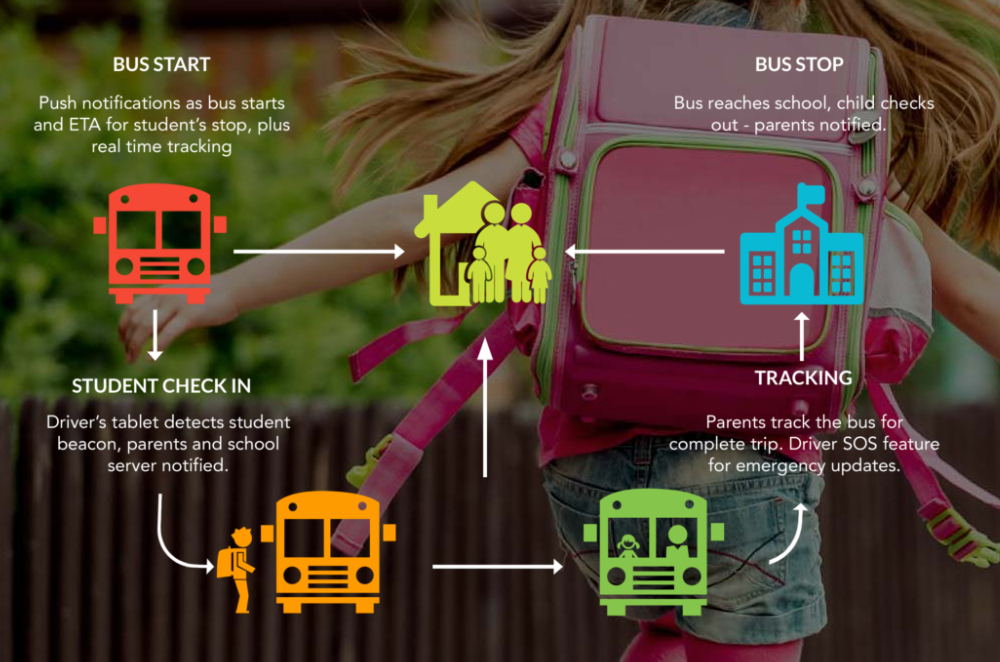
EAO AG, a company specialising in human machine interfaces, has a new train passenger interface that provides phone charging and information services.

The information services use iBeacon locating to allow train operating companies to provide added value services such as journey information, ticket validation and refreshments requests. The wireless USB phone charging fits onto seats and the iBeacon is detected in mobile apps.

“The iBeacon in each Passenger Interface also transmits a code to the passenger’s travel app, while the cloud translates the code into a carriage and seat number, making seat reservations easier to track and helping make passengers’ journeys more connected than ever”

Read about Beacons in Transportation
Beacons in Metro Stations

There’s a new article today at Global Rail News on how MTR, who run the Hong Kong metro, is trialling Bluetooth beacon navigation at Admiralty Station.

“As well as helping customers navigate the station itself, one of the new features, “Fast Exit”, will tell passengers which train car and door number to board when they set off on their journey in order to be closest to the exit at their destination station.”

The pilot is part of MTR’s Rail Gen 2.0 programme.