Affordable Indoor Tracking Using Bluetooth for Care and Asset Monitoring

A new paper describes a system that helps track people or objects inside buildings. It uses Bluetooth LE signals to estimate where something is located indoors.

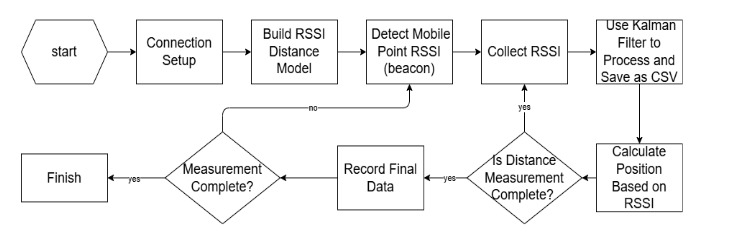
The main idea is to place beacons around a building and use devices like Raspberry Pi receivers to pick up their signals. By measuring how strong the signal is, the system estimates how far away each beacon is, and from that works out the position of a person or object.

A problem with this approach is that Bluetooth signals indoors are unreliable. Walls, people, and other objects can interfere, making the signal jump around and giving inaccurate results. To fix this, the system uses a mathematical method, a Kalman filter, to smooth out the signal and reduce noise, making the readings more stable .

It also improves accuracy by constantly adjusting how it converts signal strength into distance, based on real measurements taken in the environment. This means the system adapts to different indoor conditions rather than relying on fixed assumptions.

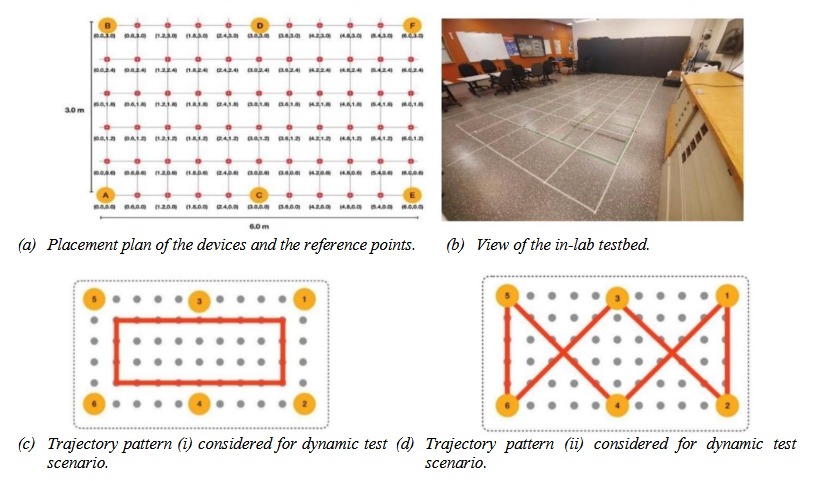
In testing, the system was set up in a small 5 by 5 metre area with three Bluetooth beacons and many test points arranged in a grid. Data was collected at each point and processed to calculate positions. The final location is worked out using a method that gives more weight to closer signals.

The results showed that the system could locate objects very accurately, with errors of only a few centimetres (around 0.3 metres or less), and could update positions in real time every second. It also significantly reduced signal noise, making the tracking more reliable.

Beacon-Based Spatial Signal Mapping for Indoor Navigation

New research involves an indoor positioning system in which Bluetooth beacons are not used to directly calculate position, but instead provide a spatial signal structure that supports localisation.

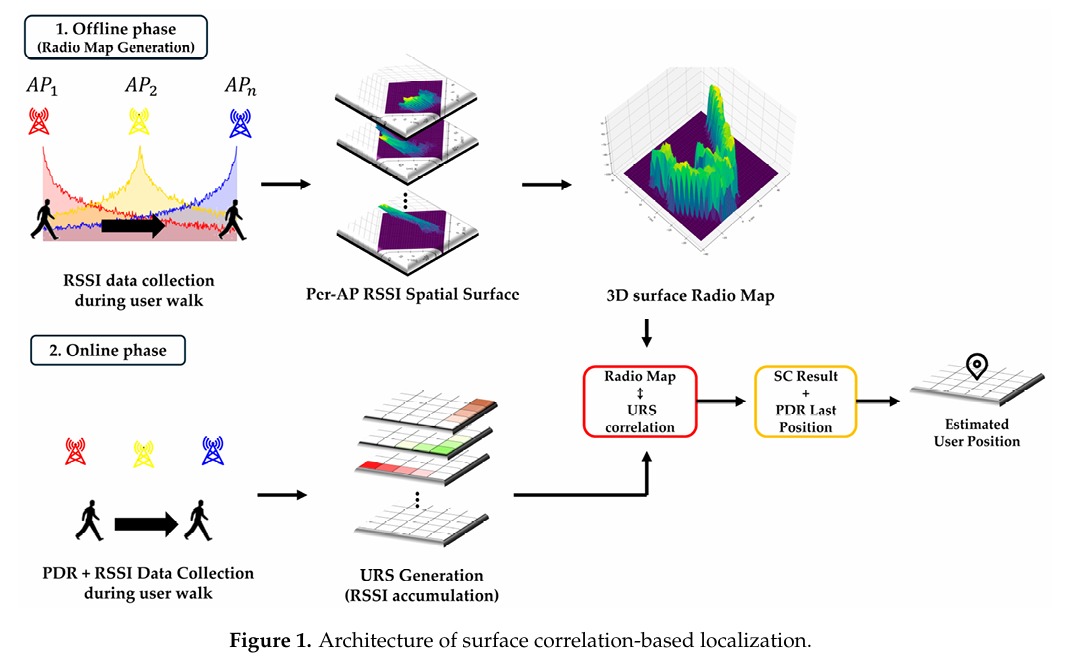
BLE beacons are installed throughout the hospital and continuously transmit signals. A smartphone receives these signals as RSSI values while the user moves. During an initial setup stage, these measurements are collected across the environment to build a radio map, which represents how signal strength varies over space. Rather than storing isolated readings at specific points, this map captures a continuous spatial distribution of signals.

As the user walks, the phone combines inertial sensing with ongoing BLE measurements. Instead of relying on individual RSSI readings, the system accumulates them along the user’s estimated path to form a User RSSI Surface (URS). This surface represents the pattern of signal strength experienced over the trajectory, effectively encoding how the environment looks in terms of radio signals.

Localisation is achieved by comparing this user-generated signal surface with the pre-built radio map. The system searches for the position where the two patterns best align using surface correlation. In this way, the beacons enable localisation through pattern matching rather than through direct distance estimation or simple fingerprint lookup.

The beacon data also plays a key role in correcting errors from inertial tracking. Since pedestrian dead reckoning gradually drifts, the system tests multiple possible trajectory orientations and selects the one whose signal pattern best matches the beacon-based map. This allows the system to continuously adjust the user’s path and reduce accumulated error.

A Framework for Accurate Multi-Floor Indoor Localisation

New research presents RELoc, a WiFi fingerprinting indoor localisation framework designed to work reliably in multi-floor buildings where conventional 2D approaches often struggle because they cannot properly resolve vertical (between-floor) ambiguity. The method combines Recursive Feature Elimination with Cross-Validation (RFECV) to select the most informative WiFi access point signals, and an Extremely Randomised Trees regressor to predict positions as either 2D coordinates or full 3D coordinates including floor information. The trees model is tuned using Bayesian hyperparameter optimisation via Optuna’s Tree-structured Parzen Estimator, with the aim of improving accuracy while keeping computation manageable for practical deployments.


The authors evaluate RELoc on two public datasets, SODIndoorLoc and UTSIndoorLoc, and report that the 2D version achieves mean absolute errors of 1.84 m (SODIndoorLoc) and 4.39 m (UTSIndoorLoc). When floor level is incorporated for 3D prediction, performance improves markedly compared with the corresponding 2D setup, reducing error by about a third on SODIndoorLoc and by just over a quarter on UTSIndoorLoc, which the paper attributes to 3D modelling’s ability to separate locations that look similar in WiFi signal strength in the horizontal plane but lie on different floors. Across both datasets, the reported results show RELoc outperforming a range of baseline machine learning, ensemble, and deep learning methods, while also training faster than heavier neural approaches in their experiments.


The paper concludes that combining cross-validated feature selection with an efficient tree ensemble and automated tuning produces a strong balance of accuracy and computational efficiency for multi-floor indoor positioning.

Improving Data From Bluetooth Beacons

A new paper addresses a core limitation of beacon-based indoor localisation systems, unstable and noisy RSSI measurements that degrade distance estimation and, by extension, location accuracy. The work focuses on Bluetooth Low Energy beacon deployments as a primary use case, alongside Wi-Fi and Zigbee, within Indoor Spatial Temporal Systems that rely on trilateration from RSSI values .

In Bluetooth beacon systems, RSSI values fluctuate significantly indoors due to multipath effects, attenuation from walls and furniture, human movement and device interference. The paper shows that conventional approaches, where RSSI filtering is performed in the cloud using Kalman or adaptive Kalman filters, introduce unacceptable latency for real-time beacon applications such as indoor navigation, proximity detection and safety monitoring. Moving filtering closer to the beacons at the edge reduces transmission delay but introduces a new problem. Adaptive filters such as robust self-adaptive Kalman filters are computationally expensive and unsuitable for resource-constrained edge devices commonly used with Bluetooth beacons .

To address this, the authors propose a lightweight edge-Kalman Filter designed specifically for noisy RSSI streams like those produced by Bluetooth beacons. Instead of continuously updating noise parameters, the filter only updates when a statistically significant change is detected between consecutive RSSI windows using density ratio estimation. This reduces unnecessary computation while still responding to real environmental changes, making it well suited to beacon receivers such as Raspberry Pis or mobile devices operating at the edge .

Experimental results using multiple Bluetooth beacon datasets show that the proposed approach substantially reduces distance estimation error compared with raw RSSI, standard Kalman filtering and robust self-adaptive Kalman filtering. In beacon scenarios with real-world noise, the edge-based approach achieves lower mean squared error while requiring fewer computations, which directly improves responsiveness and quality of service for Bluetooth beacon applications. The paper also demonstrates that cleaner, filtered beacon RSSI significantly improves downstream machine learning models for indoor location prediction, increasing classification accuracy to near-perfect levels in tested scenarios .

Using ESP32 BLE Modules for Indoor Asset Tracking

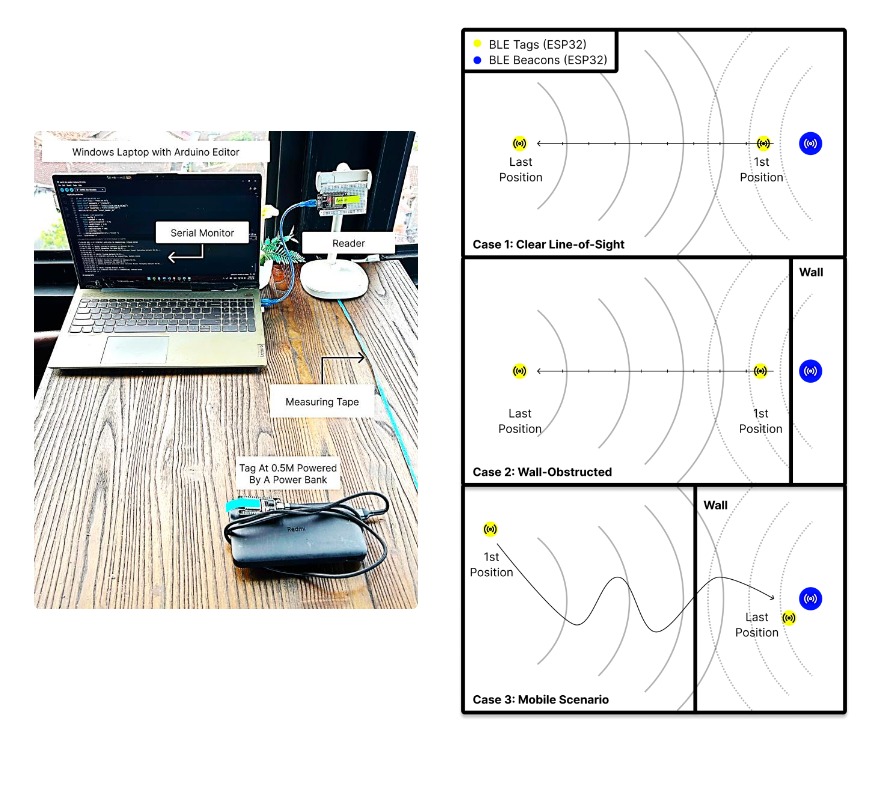
A new paper titled Evaluation of RSSI-Based Distance Estimation with ESP32 BLE Modules for Indoor Asset Tracking investigates the accuracy and reliability of Bluetooth Low Energy (BLE) technology when using Received Signal Strength Indicator (RSSI) data for determining distances indoors. The study uses ESP32 modules due to their affordability, energy efficiency, and built-in BLE support. Experiments were carried out in three conditions: clear line-of-sight, wall obstruction and a mobile tracking scenario.

Using a log-distance path loss model with a reference RSSI of −47 dBm at one metre and a path loss exponent of 2, the authors found that the ESP32 BLE system could reliably estimate distances within four metres under line-of-sight conditions, with less than 25 per cent error. Beyond five metres, however, the signal became unstable and led to overestimation of distances, particularly in obstructed environments. A wall caused an immediate signal drop of 6 dBm even at one metre, and packet loss rose from zero per cent at short distances to around fifty per cent at 8.5 metres. Mobile tracking showed irregular RSSI jumps, making movement detection inconsistent.

The results demonstrate that raw RSSI values are too variable for accurate standalone tracking, mainly due to reflection, absorption, and interference effects. While simple to use and inexpensive, the technique is unreliable for precise positioning. The study concludes that to achieve dependable performance, especially in complex indoor settings such as hospitals or factories, more advanced methods are needed. These could include Kalman filtering, RSSI fingerprinting, or sensor fusion combining multiple BLE readers or inertial sensors. Such enhancements could reduce estimation errors from about 500 per cent to below 30 per cent over ten metres.

Overall, the research establishes a baseline understanding of the limitations of ESP32-based BLE tracking systems and provides a foundation for future work aimed at improving indoor positioning accuracy through data filtering and sensor integration.

Improving Accuracy and Adaptability in Complex Indoor Environments

A new paper presents a framework for indoor localisation and the monitoring of Activities of Daily Living (ADLs) using Bluetooth Low Energy (BLE) signals and machine learning. It tackles the challenges of accuracy and adaptability in complex indoor environments by introducing a novel closed-loop system that recalibrates itself with live Received Signal Strength Indicator (RSSI) data. This allows the system to learn from a small set of samples, enrich them to cover wider distances, and maintain accuracy over time.

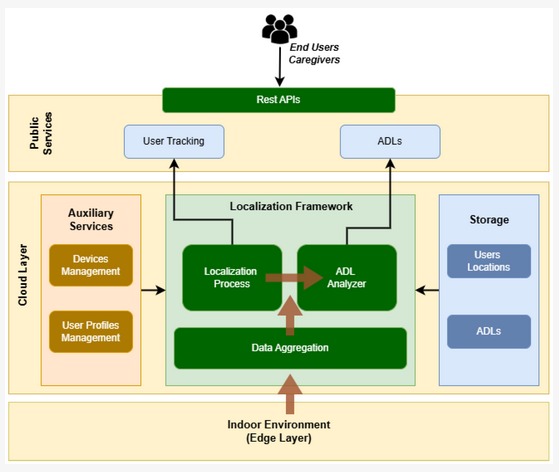
The approach achieves localisation errors as low as 0.5 to 0.8 metres, improving on previous methods by about 65 per cent. Once accurate positioning is achieved, the framework can identify ADLs such as cooking, sitting, or sleeping with an accuracy of 91 per cent, relying on patterns of movement and location. The architecture integrates three layers: an edge layer with beacons and devices, a cloud layer for processing and storage, and a public layer providing real-time services to caregivers or family members.

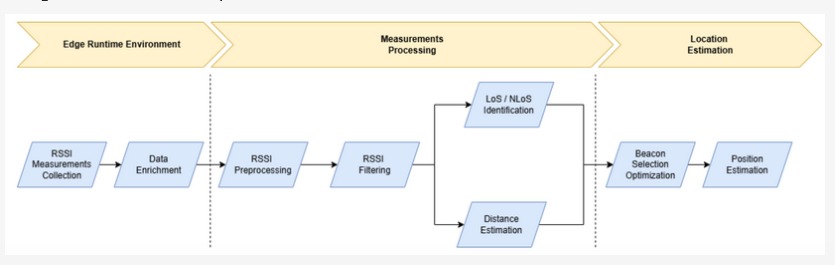
The work combines signal filtering, line-of-sight classification, distance estimation, beacon selection optimisation, and location estimation through advanced algorithms such as Random Forests, Gradient Boosting, and Bi-LSTMs. Evaluation in a controlled living environment confirmed reliable performance, with strong results across multiple test routes.

The authors highlight limitations, such as RSSI’s sensitivity to environmental conditions, hardware variability, and challenges in adapting to diverse residential layouts. They suggest future work in hybrid sensing methods, generative models for dataset expansion, and personalised ADL modelling.

The study demonstrates that a feedback-driven, machine learning-based RSSI system can offer scalable, accurate, and adaptable indoor localisation and ADL monitoring, supporting safer and more independent living environments, particularly for elderly people or those with disabilities

Tracking Workers Indoors on Construction Sites

A newly published paper presents a deployable Real-Time Locating System (RTLS) for tracking workers indoors on construction sites using Bluetooth Low Energy (BLE) technology. Existing systems often face challenges with cost, wiring, reliance on smartphones, accuracy, and adaptability to the constantly changing layout of construction projects. This study introduces a fully beacon-based system that replaces traditional receivers with low-cost, battery-powered BLE beacons and employs a modular placement strategy, reducing costs and simplifying installation.


The proposed system combines a wireless hardware setup with localisation algorithms based on triangulation and filtering techniques. It addresses issues such as inconsistent signal strength and multipath interference by applying post-processing methods including Kalman filters, exponential smoothing and moving averages. Tests carried out in controlled environments showed localisation errors of around 0.56 metres for moving workers and 0.64 metres for stationary ones, which is an improvement over many previous studies. The research also examined different placements of beacons on the body, with hardhat placement giving the most reliable results.

The system balances accuracy with deployability and cost efficiency. It offers flexibility through adjustable smoothing levels, allowing it to serve both safety-critical real-time monitoring and longer-term productivity analysis.

The paper demonstrates that a beacon-only BLE RTLS can provide a scalable, low-cost, and accurate solution for indoor worker tracking in construction, with applications in safety management, productivity monitoring, and automated workspace identification

Location in Underground Mines

New research titled Reliable Proximity Sensing for Underground Mining by Johnny Lam explores the challenge of accurately tracking personnel and vehicles in underground mines using digital positioning systems. While vehicle tags use onboard sensors like accelerometers and gyroscopes for precise positioning, personal tags rely on less accurate signal strength readings from fixed reference points. This discrepancy can lead to safety issues, especially when personnel are inside vehicles but their tags report separate positions.

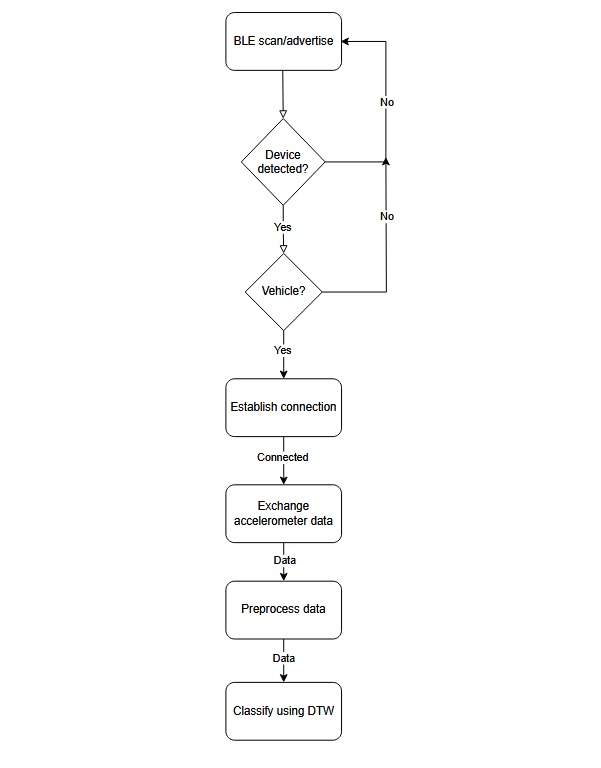
To resolve this, the study investigates a method for personal tags to inherit the vehicle’s position by first determining if they are actually inside the same vehicle. The approach uses Bluetooth Low Energy (BLE) to detect nearby devices, then samples and compares accelerometer data from both the personal and vehicle tags. Using dynamic time warping (DTW) and variance analysis of the motion data, the system classifies whether a personal tag is inside the vehicle.

The system was implemented as an Android application and tested under various conditions. BLE proved effective for detecting proximity, while combining DTW and variance analysis yielded a classification accuracy of about 90%. Power consumption increased by roughly 22% with full functionality.

Using Bluetooth Beacons for In-Place Ageing

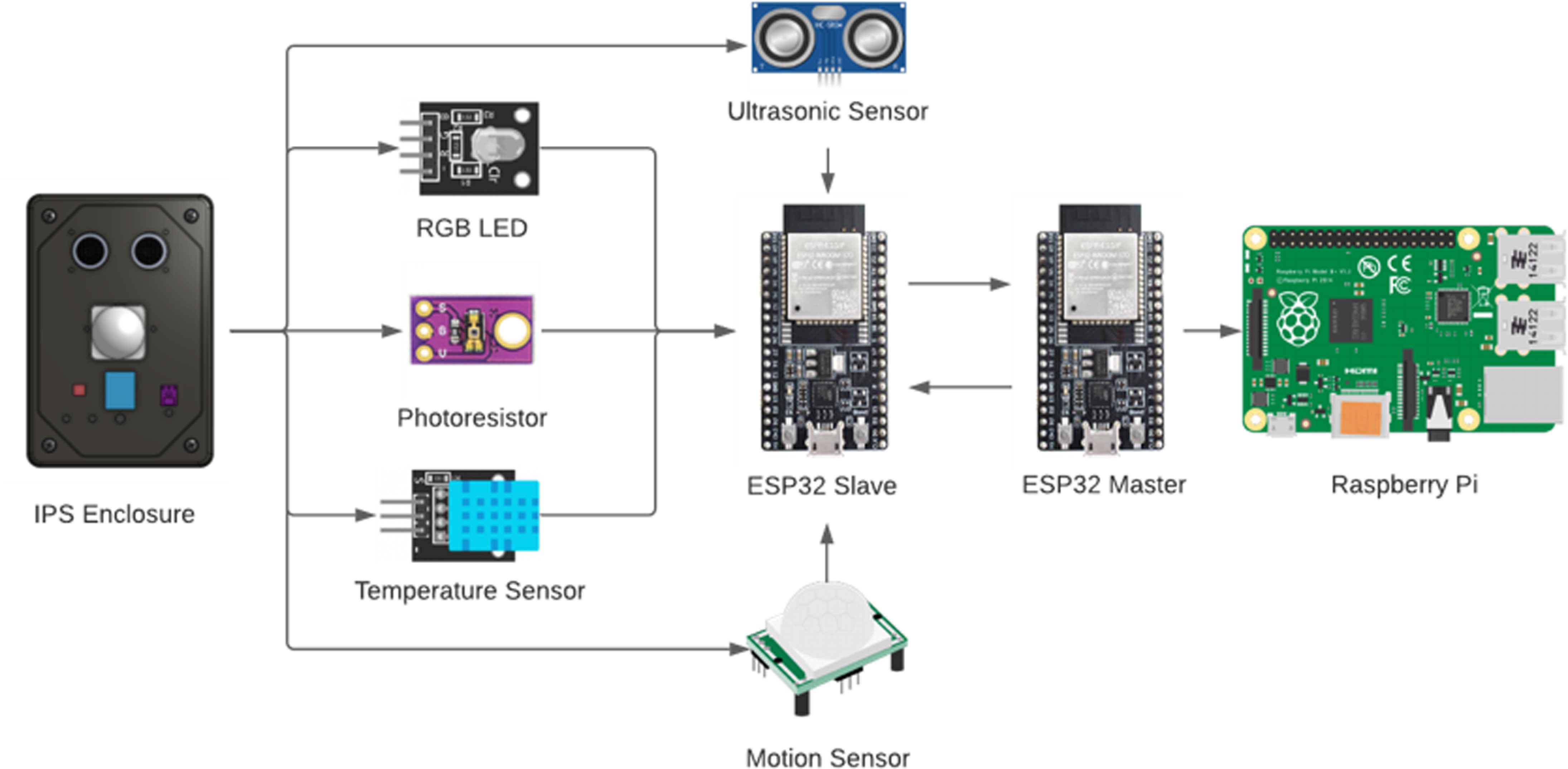
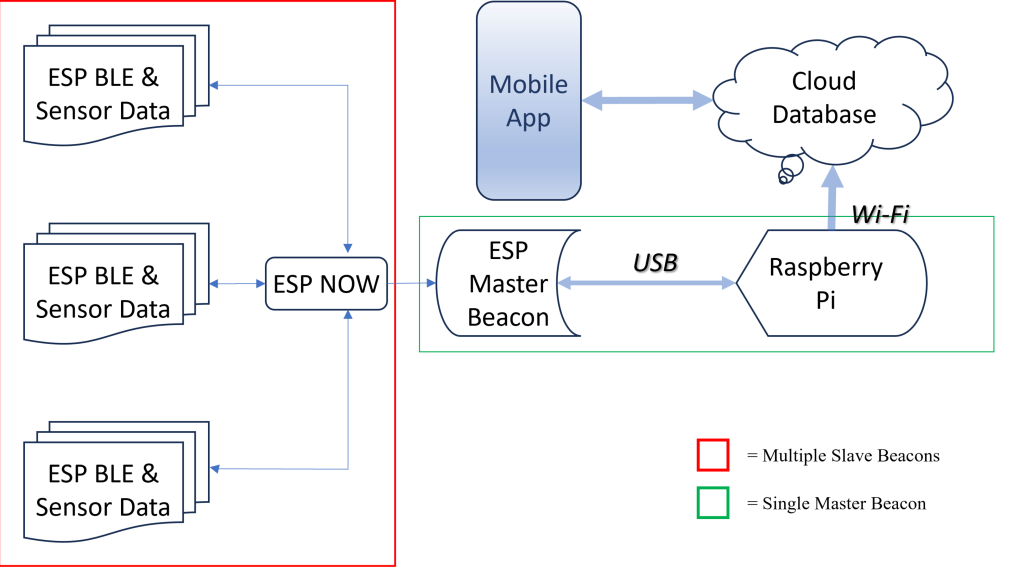
A new study describes an indoor‑positioning system built around Bluetooth Low Energy. Each room receives a mains‑powered beacon that houses an ESP32 micro‑controller running BLE in advertising mode, together with motion, ultrasonic, light and temperature sensors. Older adults wear a low‑cost tag or smartwatch that periodically transmits its identifier. Beacon modules report the relative signal strength indicator of the tag they detect to a central Raspberry Pi hub via ESP‑NOW, allowing the hub to decide where the wearer is without relying on a floor plan.


Bluetooth was selected because it works reliably at room scale, consumes little power on the wearable, and is already present in commercial tags and watches. Although the latest specification is 5.3, the authors chose the mature 4.0 stack for stability and documentation. Its 30 m nominal range comfortably covers a domestic room while avoiding the battery drain seen with Wi‑Fi.


During installation the wearer simply walks around each room for twenty seconds. The hub records baseline RSSI distributions from at least three nearby beacons, then uses an exponential filter (optimised at a 0.2 weighting) to smooth radio‑frequency noise before applying a calibration‑based lookup and, when needed, trilateration. This self‑calibration lets the system adapt to furniture, walls and other sources of multipath without professional setup.

Static tests at 1, 2.5, 5 and 10 m showed raw RSSI fluctuating by several decibels because of indoor interference; filtering reduced variance to about 1.7 dB at ten metres, making distance bands for different rooms distinct. In two typical UK‑style houses the system identified the correct room in roughly 96 % of more than 600 ground‑truth checks. Median transition recognition between adjacent rooms was under two seconds and remained below eight seconds even when rooms were far apart.

Adding the passive‑infra‑red and ultrasonic sensors improved confidence when RSSI values from neighbouring rooms overlapped, taking overall presence‑detection accuracy to 93 % with motion sensing alone. All BLE and sensor data stay on the hub and, if the resident allows an Internet link, are only mirrored transiently to Firebase for remote monitoring. The authors argue that this low‑cost, plug‑and‑play BLE architecture is particularly suited to large‑scale ageing‑in‑place studies and could equally track clinical equipment in hospitals.

Using Beacons for AR Synchronisation

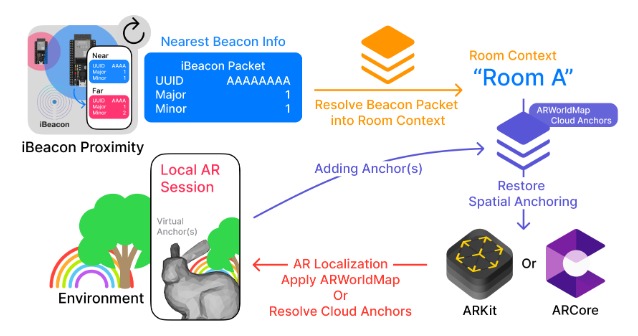
New research presents a framework for synchronising multi-user augmented reality (AR) sessions across multiple devices in shared environments using beacon-assisted technology. The conventional reliance on vision-based methods for AR synchronisation, such as Apple’s ARKit and Google’s ARCore, often fails in larger spaces or under changes in the visual environment. To overcome this, the study introduces two alternative methods using location beacon technologies: BLE-assist and UWB-assist synchronisation.


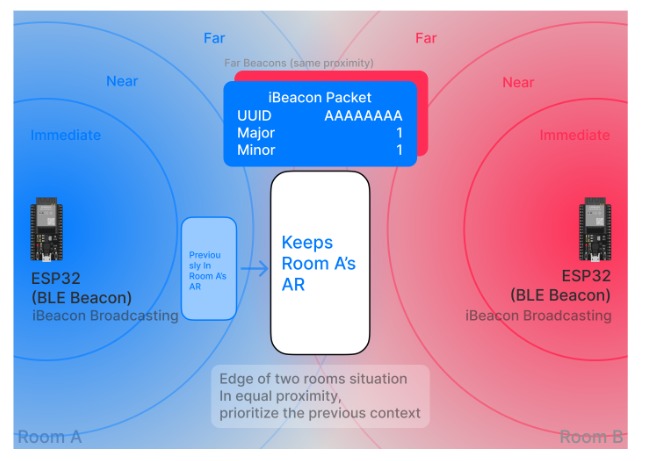
The BLE-assist method uses iBeacon broadcasts to determine the user’s room context and integrates this with existing AR anchoring frameworks. By breaking down large areas into room-sized contexts, this approach allows ARWorldMaps or Cloud Anchors to be managed in a more localised and efficient manner. It achieves high positional accuracy, but its performance drops under significant environmental changes.

On the other hand, the UWB-assist method uses ultra-wideband beacons and the device’s azimuth reading to create a fixed spatial reference. This allows persistent anchoring across sessions, with consistent resolution success even in varied physical surroundings. Although this method does not offer the same fine-grained accuracy as BLE, it maintains consistent performance with a near-constant average synchronisation latency of 25 seconds. However, it is more technically involved, requiring the initial ranging process to stabilise and potentially longer localisation times if many devices are present.


In comparative evaluations, UWB performed better in terms of reliability and robustness to environmental changes, while BLE was more accurate in anchor placement. UWB’s reference pose calculations demonstrated a mean error of 0.04 metres in position and 0.11 radians in orientation, which, while less precise than BLE, remains within an acceptable range for most applications.

The study also evaluates power consumption, scalability, and cost. BLE beacons (ESP32) consume more power than UWB beacons (DWM3001CDK), but the latter are more expensive to deploy. In terms of scalability, BLE is limited by map-saving conflicts and anchor lifespan, while UWB faces challenges in concurrent device ranging, although improvements in beacon hardware could address this.

In conclusion, the BLE-assist approach is better suited to short-term, high-precision AR experiences in relatively stable environments. UWB-assist is preferable for larger, more dynamic settings where consistent synchronisation is critical, even at the expense of slight positional inaccuracy and higher delay. The source code for this work is publicly accessible for further development.


Our take on this:

One point worth noting is that using the ESP32 as a beacon platform is not optimal in terms of power consumption. Employing dedicated hardware beacons designed specifically for this purpose would significantly reduce power usage. Moreover, such specialised hardware would offer a more compact and efficient form factor, with antenna configurations that are better suited for precise positioning and signal stability. This project shares similarities with our consultancy for Royal Museums Greenwich on the Cutty Sark.