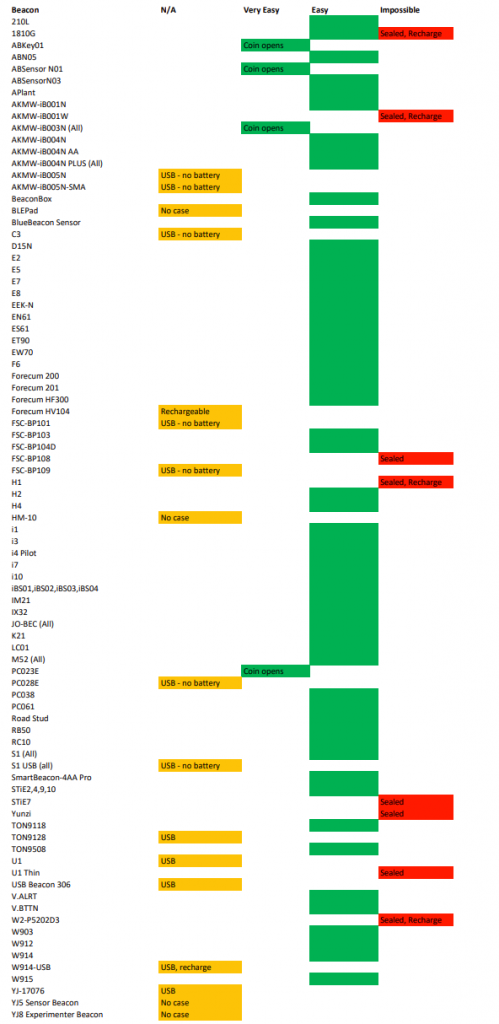
We have updated our table to show the relative difficulty of changing the battery in the beacons we currently have in stock. ‘Very easy’ means the beacon has a compartment opened with the edge of a coin and ‘Easy’ usually means the case prises open or uses screws.
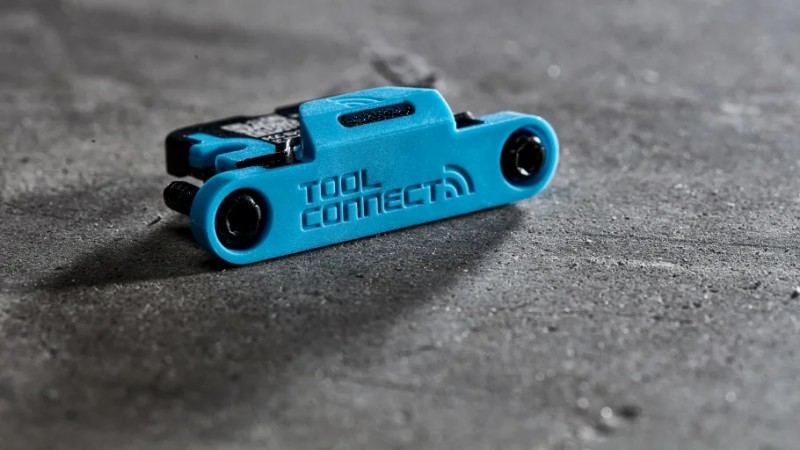
DEWALT have a new Bluetooth beacon, the DCE042, that provides tracking of hand power tools.
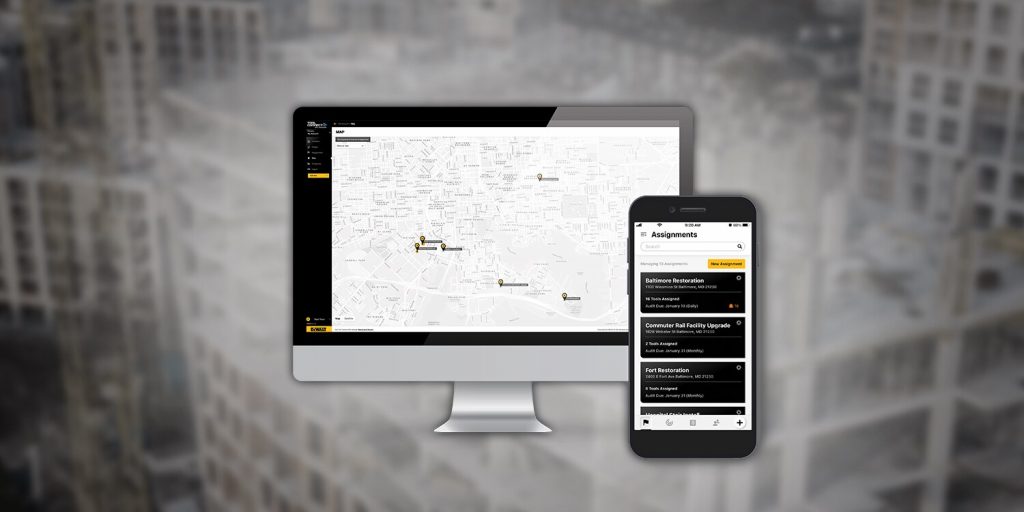
It works with the Tool Connect System, on web or mobile, to track, assign, and manage tools to save time, improve productivity and reduce costs due to lost tools.
Several years ago we provided consultancy for a similar system developed by AddMobile (since been acquired by Infobric Group). The use of beacons in construction poses challenges related to the internal physical construction of beacons beyond them having to be rugged and IPX rated. Care also needs to be taken to design systems for efficient battery use so that device battery management doesn’t become a burden for users.
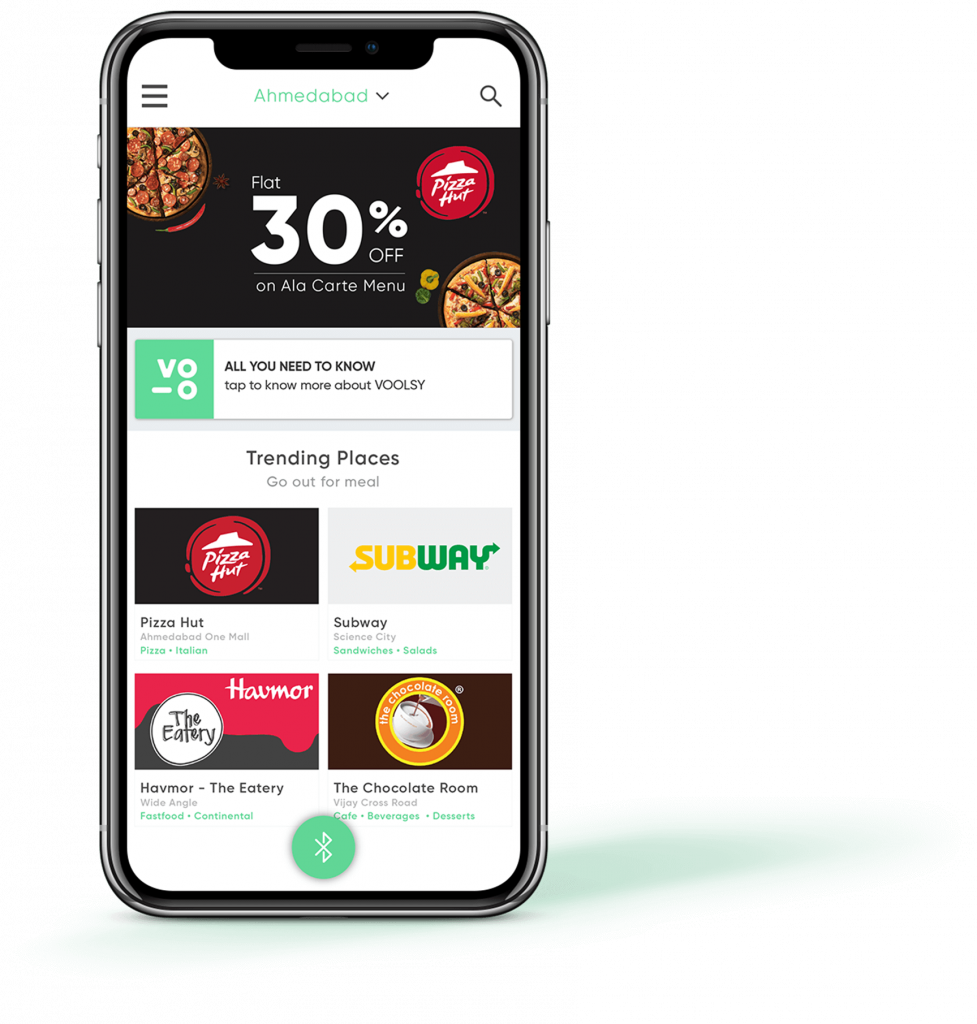
A growing number of restaurant ordering apps, such as Voolsy, use Bluetooth beacons to determine location.
Voolsy detects restaurants through iBeacons, lets customers explore digital menu, customize their order and place it with just a few taps across thousands of locations. Voolsy reduces your waiting time to get attention of waiter from minutes to seconds
Voolsy supports both ordering and payment for retail locations such as restaurants, food courts or cinemas using beacons. It also provides Voolsy cashback and other exclusive offers from partnered restaurants.
When in typical use, it’s not necessary to connect to a beacon. A beacon just advertises and is detected by a smartphone or Bluetooth gateway. However, to initially set up a beacon you usually connect via a smartphone app. The app might not connect for a number of reasons. Here are some tips:
Most beacons need to be put into ‘connectable’ mode. For example, for most AnkhMaway beacons this means tapping them sharply on a table until they ring – they remain connectable for 45 secs and once connected remain so until you have configured the beacon. For Axaet and Meeblue beacons they stay connectable for a few minutes after turning them on.
Make sure you are connecting to the correct beacon. This is especially important if you are seeing multiple Bluetooth devices in the list. For example, we had one customer who hadn’t removed the plastic battery slip and had been trying to connect to some other Bluetooth beacon/device.
Connecting, via what is a wireless interface, might not work first time. While most connections do happen first time, there can be radio interference and radio signal reflections that can cause the connection to fail. Some configuration apps re-try if the first connect fails while others don’t. Make sure you have tried a few times before concluding a particular scenario doesn’t work.
Some phones have a faulty Bluetooth beacon stack. That’s the Bluetooth software built into your phone. While you might be able to view the beacon, connecting to it to change settings uses more advanced functionality that’s sometimes faulty. Over time, we have discovered about 5% of our customers have such problems, more so on Android. It’s a much more common problem than a faulty beacon. You can isolate this possibility by trying a different phone and/or different phone OS type.
Don’t try connecting from more than one phone at a time. When connected, that phone has exclusive access to the beacon and other phones won’t be able to see the beacon and connect.
Make sure you are using the correct password to connect. It’s not the password on the sticker which is the web site technical area password.
Try rebooting your phone to reset the internal Bluetooth software.
Try resetting the beacon by removing and replacing the battery (where possible). This isn’t the same as turning off via a button press which usually only puts the beacon into hibernation and doesn’t restart the device.
Some configuration apps have known bugs. Read the BeaconZone technical area for your particular beacon manufacturer where we document known problems and workarounds.
The beacon could be faulty. This is actually a very rare occurrence and you should initially be considering other more likely possibilities (above). You can isolate this possibility if you have another similar beacon. Please contact us for replacement if you conclude you have a faulty beacon.
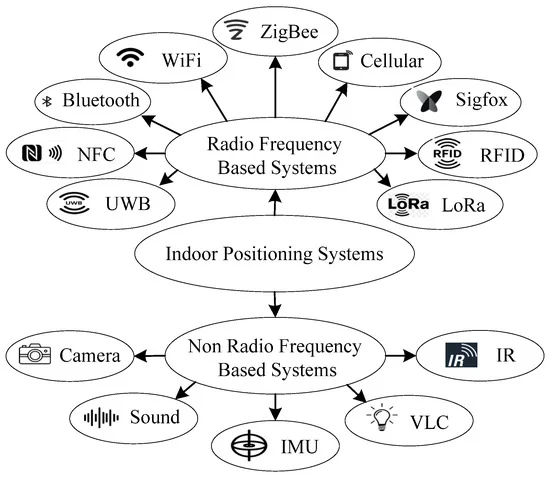
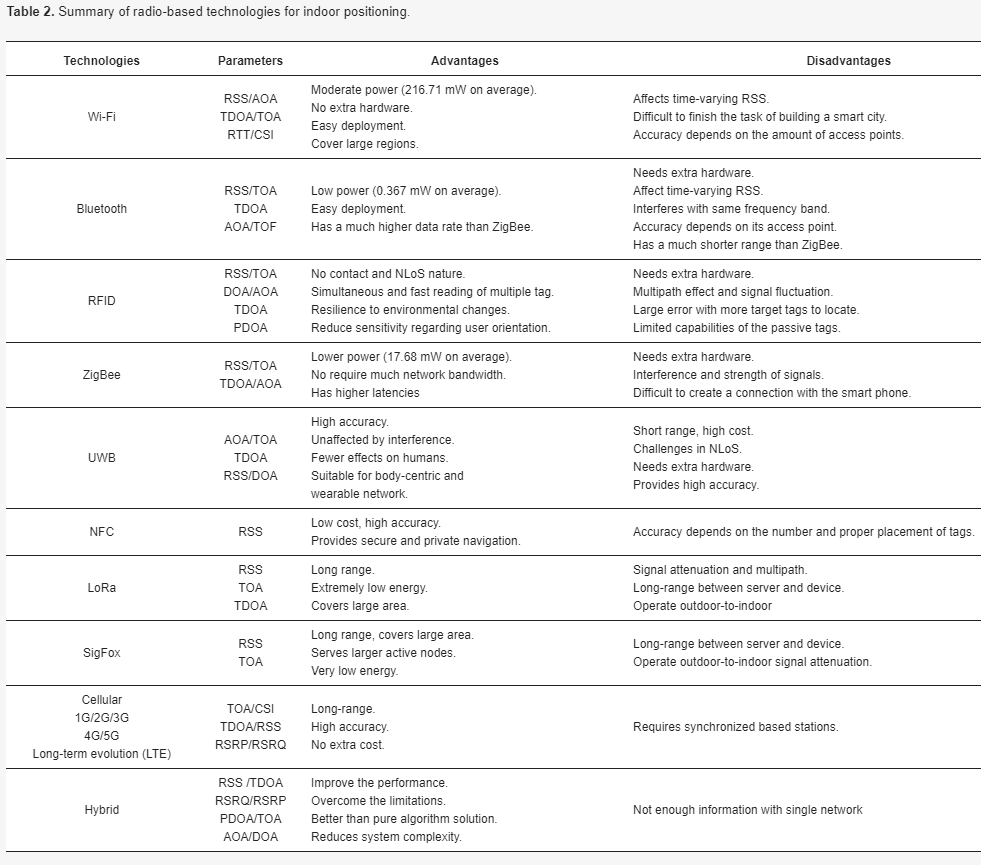
From a hardware perspective it covers, RFID, UWB, Bluetooth, ZigBee, IR, WiFi, ultrasonic and hybrid systems. There’s a useful comparison table of the various technologies:
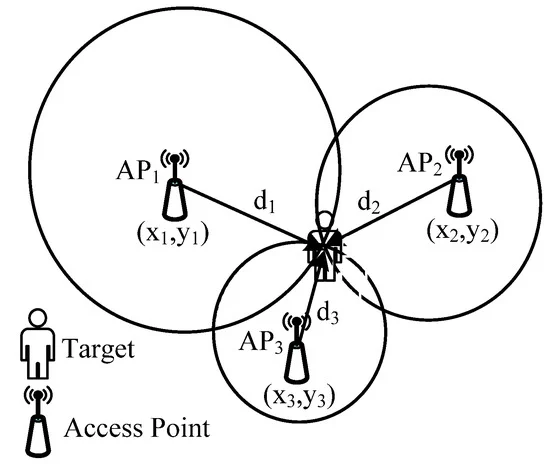
The paper describes methods of using radio signals to determine position such as RSSI ranging, trilateration, angle of arrival (AOA), round trip time of flight (RTOF), phase of arrival (POA) and time of arrival (TOA).
Trilateration
It also describes methods such as fingerprint localization.
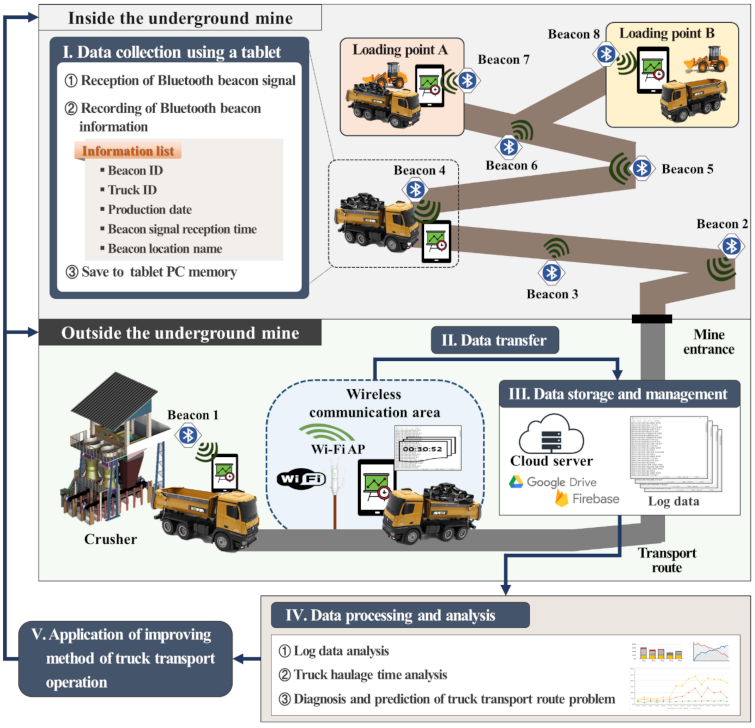
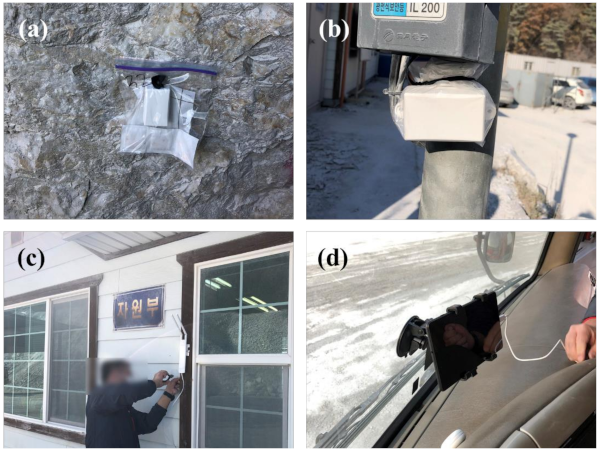
Beacons are detected by truck mounted tablet computers and analysed by a cloud server. This was tested in a limestone mine located in Jeongseon, Korea. The system is able to detect sections of routes that are stable and unstable so as to highlight areas that need further analysis and remediation to improve transit flow.
This is one of the first applications of Bluetooth Mesh outside of lighting. Workers push the panic button if they need help. A nearby beacon is used to identify their location and a notification is sent to security or the hotel manager.
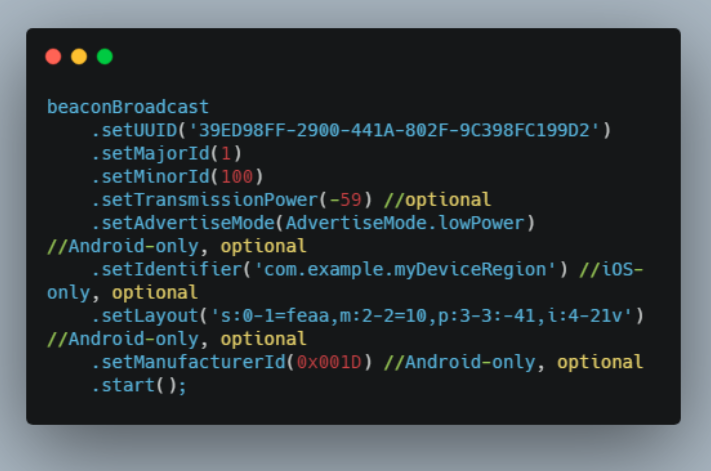
If you want to try Bluetooth beacon advertising from your iOS or Android smartphone there’s a Flutter plugin called beacon_broadcast:
Simulating a beacon from a smartphone is a great way to get started and explore Bluetooth LE prior to buying dedicated hardware devices. However, it’s not something you should progress to regular use because advertising in this way uses a lot of battery power.
Beacon_broadcast is open source and the source code can be found on GitHub.