Using Beacons in Zoos

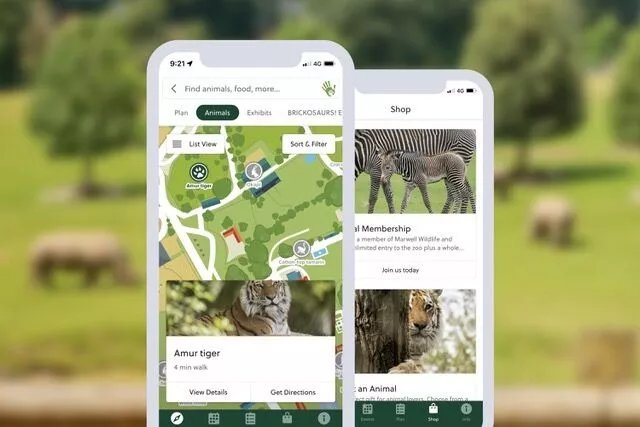
Marwell Zoo has a new app, with support for beacons, that allows visitors to plan their day, locate animals and stay informed about the zoo’s latest news.

The app provides an interactive map and contextual messages to the 140-acre park’s 500,000 visitors a year. The app uses the attractions.io platform who have an article on how to add value to a visitors’ experiences through the use of contextual messages and having a better understanding of guests.

Read about Beacons in Visitor Spaces

View iBeacons

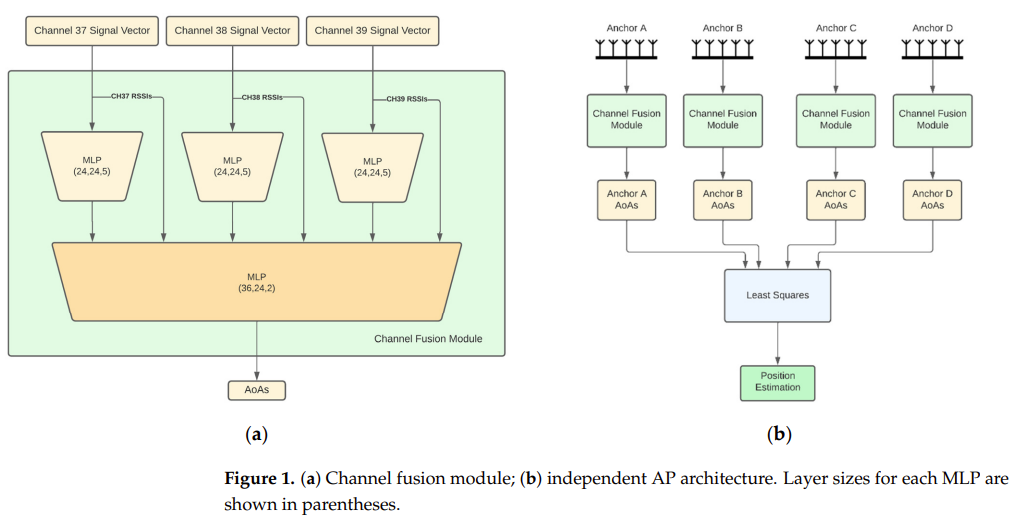
Processing iBeacon RSSI Using AI Machine Learning

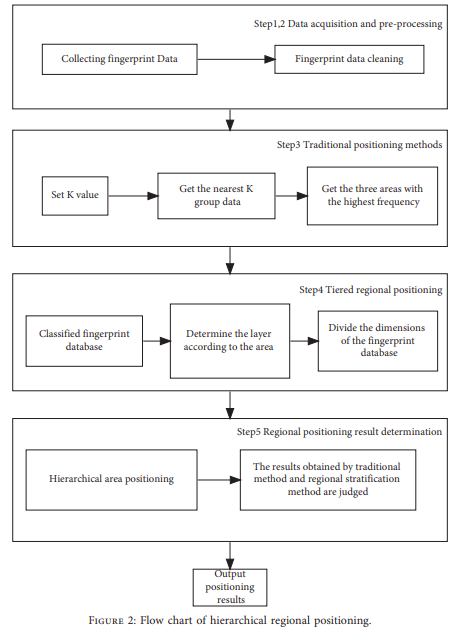
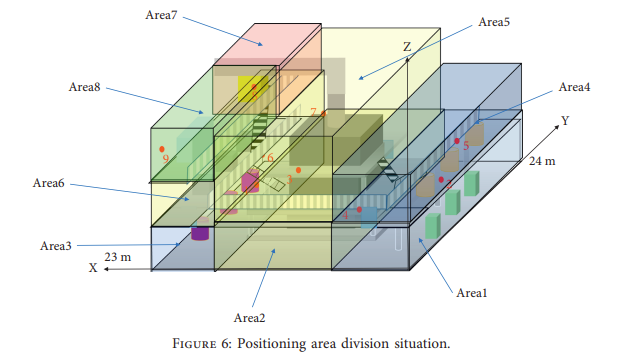
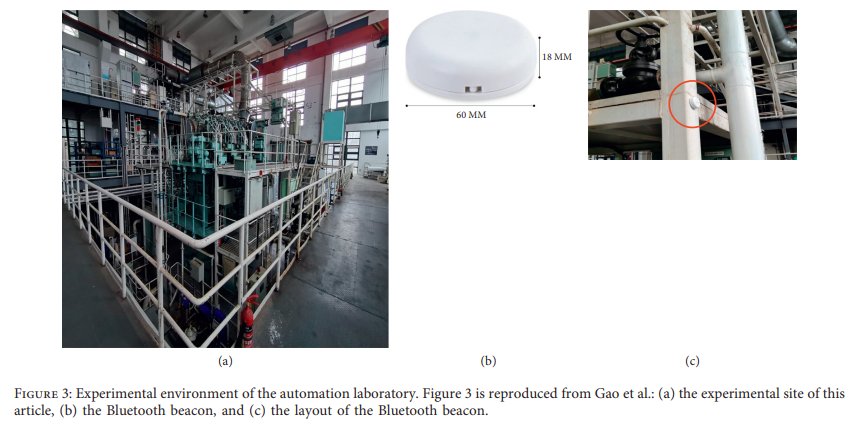
There’s new research from China on Regional Double-Layer, High-Precision Indoor Positioning System Based on iBeacon Network.

The project used extended Gaussian filtering to delete and filter significant abnormal data values caused by multipath radio noise indoors. A deep neural network was also used to fingerprint data.

The system resulted in a maximum error positional error of only 1.02m.

Bluetooth for Locating

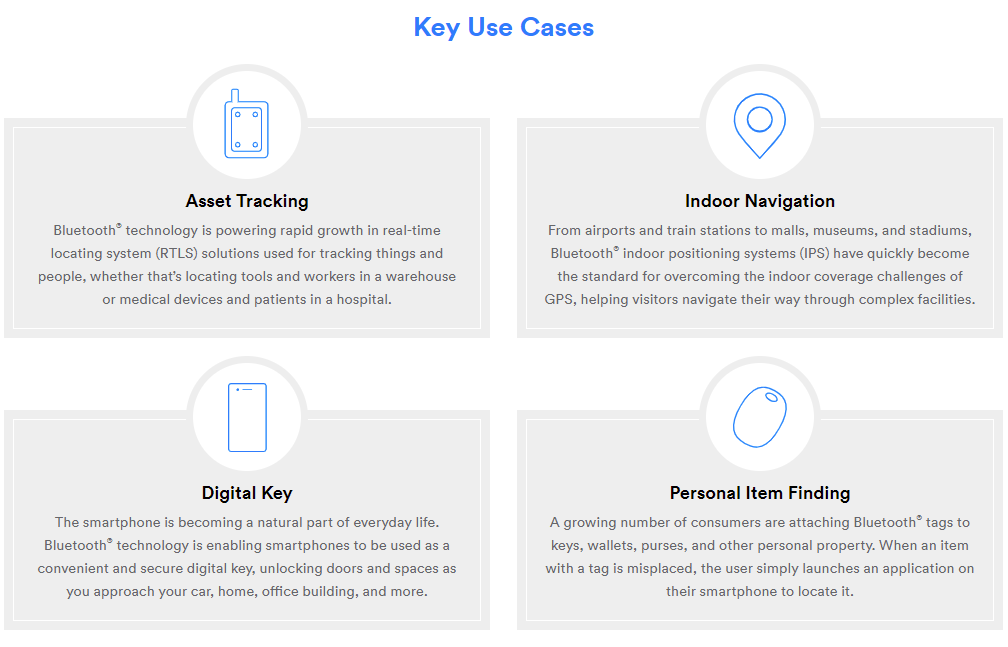
The Bluetooth SIG, the organisation that produces Bluetooth standards, has a recent post The Myths & Facts About Bluetooth Technology as a Positioning Radio. It talks about the location services in general and how they have evolved over time. It explains how Bluetooth helps solve key enterprise pain points to save tens to hundreds of billions of dollars globally through enhanced operational efficiencies, increased worker safety, and loss prevention.

In manufacturing facilities, billions of dollars are lost through unplanned downtime thanks to being unable to locate assets, tools, and equipment. In warehouses, RTLS can help automate the tracking of assets, such as pallets, which is becoming more essential with the ever-increasing size, complexity, and amount of assets stored

Despite the gains thus far, this only represents as small proportion of the opportunity because only a very small percentage of the potential addressable market in the enterprise is using RTLS.

The article continues with a summary of the myths we covered in a previous post.

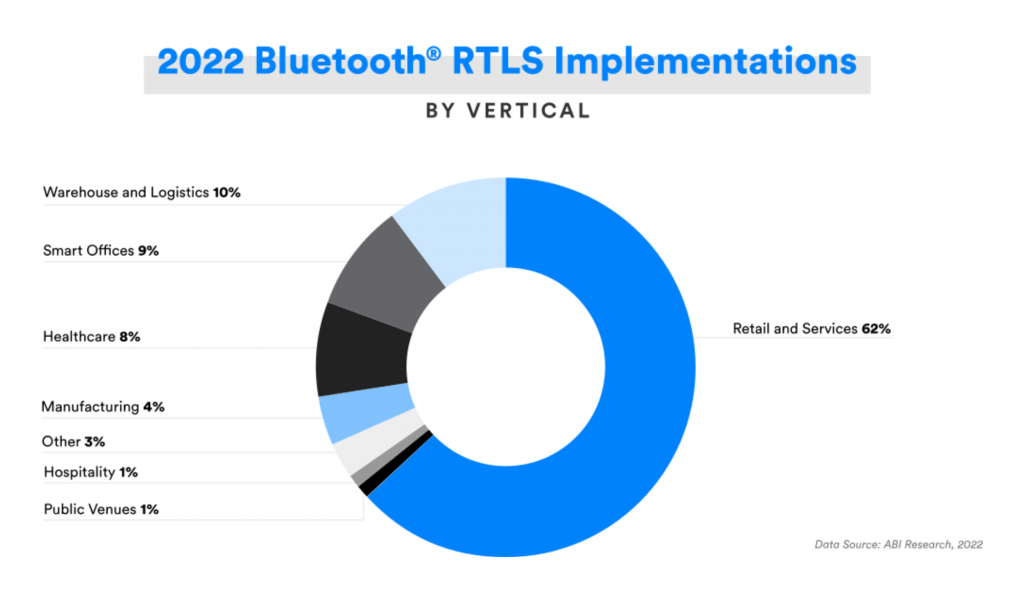
ABI Research expects that will be a 2.5x increase in total Bluetooth RTLS deployments over the next five years, with the fastest growing segments being healthcare, warehouse and logistics, manufacturing and smart building.

Increases in Prices

The semiconductor shortage has caused beacon and gateway prices to increase, on average, by about 10%. We are now seeing prices increase even further. The resurgence of the Covid pandemic in China and lockdown of cities is now squeezing production and transportation capacity. We have already experienced some ridiculously large manufacturer transportation charges.

Russia’s invasion of Ukraine has halted half the World’s supply of Neon, used for semiconductor manufacture, so it’s expected there will also be further semiconductor price rises and maybe even shortages of components.

At Beaconzone we only increase prices when we have to re-stock at a higher price. If you are starting a new project, we recommend you purchase as soon as possible to lock-in costs.

Using iBeacon for Team Management

There’s useful research by Sindhumol S of Cochin University of Science and Technology, India on Implementation and Analysis of a Smart Team Management System using iOS Devices as iBeacon.

The system provides location-based task monitoring and presence detection. Task details and announcements are available when a team member enters the range of an iBeacon broadcast. The system also provides typical project management facilities such as task allocation, notification, instant chat, status reports and employee logs.

From a technical perspective, the paper describes setting the beacon measure power, the affect of distance change on accuracy and the change in accuracy/RSSI depending on obstacle blocking.

View iBeacons

Finding the Nearest Beacon

There’s new research from Faculty of Electrical Engineering and Computer Science, University of Maribor, Slovenia on Improved Bluetooth Low Energy Sensor Detection for Indoor Localization Services.

While there has been lots of research into server-side processing to improve location accuracy, this research instead looks into improving accuracy locally, in terms of finding the nearest beacon. This kind of processing is often needed where smartphone apps provide users with contextual information based on their location, for example, in museums.

It’s not possible to use the raw received signal strength (RSSI) because it changes frequently due to changes in blocking and reflection in a room. Any errors in determining the correct transmitter can cause errors in displaying relevant information which, in turn, leads to a poor visitor user experience.

The study involved use of iBeacons detected by Android smartphones, both in a controlled room with three obstacles and a real-world setting Expo Museum.

The proposed algorithm stabilised the RSSI by considering previous measurements to filter out sudden fluctuation of the RSSI signal or the rapid movement of the mobile device. The smartphone’s accelerometer was also used dynamically change the scan interval based on the user’s movement.

In the controlled room, the proposed algorithm had a 14.29% better success rate than a standard algorithm using the raw RSSI values. It performed particularly (20%) better in spaces having medium or high density of physical obstacles. It also performed better in the real-world Expo environment with a success rate of 95% compared to 87% with a standard algorithm.

Inventory Management vs Asset Tracking Using RTLS

Real Time Locating Systems (RTLS) can be used for both inventory management and asset tracking. Here, we explore the differences between inventory and assets and the respective benefits of using a RTLS.

Inventory is stock, parts, materials and products that move through the company while assets are equipment, fixtures and furniture the company needs to do work. Inventory tends to be sold quickly to customers and leave the company while assets tend to be be kept longer term. It’s not just companies that have inventory and stock. Organisations such as government and health agencies consume rather than sell inventory and use assets to provide services.

While there are many systems that can be used to track the quantities of inventory and assets, very few track location. Knowing you have something but not knowing where it is leads to significant inefficiencies, especially in large organisations.

Managing both inventory, assets levels and location is important to avoid shortages and the need to over-stock so as to mitigate not being able to find items. In some cases items can spoil, due to expiry dates, which makes locating them more time sensitive. RTLS provides an automatic real-time view of inventory and assets so that quantities are known when items get stolen, thrown away or otherwise leave the site.

Inventory management provides better accuracy as it’s known what is in stock so the correct quantity can be ordered to meet anticipated demand. It makes it less likely products will be oversold, when not in stock, preventing end-customer disappointment. Having optimal stock saves money. Excess stock costs money until sold that can include overheads such as storage, handling fees and insurance. Excess standing stock is also is also presents the risk of loss by theft, obsolescence and unexpected damage. A better, real-time view of stock allows demand to be analysed and optimised. Having the correct stock ultimately keeps end-customers loyal due to a better customer experience.

Asset management ensures that assets don’t have to be over-purchased to compensate for inefficiencies in finding items. Knowing you have item(s) prevents unnecessary duplicate purchases. As the RTLS is real-time there’s no need for manual audits. The automatic auditing of assets also highlights items that have become lost or stolen. Knowing where assets are ultimately reduces labour costs because employees spend less time searching.

Read about BeaconRTLS

Bluetooth Myths and Facts

There’s a useful new webinar at the Bluetooth SIG on The Myths & Facts About Bluetooth® Technology as a Positioning Radio. Fabio Belloni from Quuppa explains the main Bluetooth myths and facts:

  • Performance – There are misconceptions about accuracy, latency and reliability brought over from older systems using only received signal strength (RSSI). Newer systems based on Bluetooth direction finding provide much improved performance.
  • Communication Range & Coverage Area – People incorrectly think Bluetooth is a short range 10m – 15m technology. This isn’t so. Long range beacons can transmit up to 1.5Km and can work up to 100m in location finding scenarios.
  • Multipath Propagation – It’s wrongly perceived that Bluetooth is poor in harsh environments. Bluetooth is, in fact, designed for factory floor and additionally newer AoA direction finding can use spectral analysis to reduce the affect of radio reflections.

Gabriel Desjardins from Broadcom mentions how location technologies have overcome the peak of inflated expectations caused by UWB and are now in the plateau of productivity provided by Bluetooth LE.

Andrew Zignani shows the results of a survey on RTLS from 213 C-Level decision makers across five main verticals. Only 13% of businesses have already deployed RTLS and there will be a increased uptake over the next 5 years. Technology fragmentation and operational/maintenance cost are incorrectly seen as the barriers to adoption. The new Bluetooth AoA direction finding standard is easing fragmentation. The maintenance cost is actually very low compared to the ROI in most scenarios. Most want beacon battery life to be 90+ days and cost to be $11-$20 that are easily achievable with today’s beacons.

No-Code and Low-Code Development for Bluetooth Beacons

As mentioned in our article on Using Bluetooth Low Energy (LE), Bluetooth devices such as beacons repeatedly advertising their id and for sensor beacons they advertise their sensor information.

Something needs to listen which is usually a smartphone app, a gateway or a computer such as the Raspberry Pi. These devices process the advertising to show information on a map, in a dashboard or forward on to other systems, possibly as alerts. In the case of a gateway, the information is usually sent to a local server or cloud server. The app, computer or cloud server functionality usually involves custom programming but what if you could do this with no code?

There’s a general move towards using more ‘No-Code’ and ‘Low-Code’ Development. This is where common functionality is wrapped into components that are joined together using a user interface. There are many proprietary examples most of which involve subscriptions, SaaS, lock-in and unknown longevity that makes them unsuitable for enterprise grade solutions. Conversely, we are a fan of Node-RED that provides open source flow-based programming that we have used on customer projects. Don’t be deceived by the user-interface. This is not a toy and is being used in production by many companies.

Node-RED started in 2013 as a side-project by Nick O’Leary and Dave Conway-Jones of IBM’s Emerging Technology Services group. It has since been open-sourced, continually developed and it moved to the JS Foundation in 2016.

Node-RED provides a flow-based editor that allows you wire together just about any type of input, for example, Bluetooth, HTTP, MQTT to any type of output. It also has components to generate a simple UI dashboard with widgets. There’s a large number of nodes including Bluetooth that you can import and use for input, processing and output. You can develop and run on Linux or Windows. Everything is done using a web user interface. You can run on, for example, a Raspberry Pi, AWS, Azure or more usefully for Bluetooth, on edge Linux devices.

We like to use Node-RED on Mini-PC devices, such as Intel NUCs, running Linux. We don’t use Raspberry Pi because running from SD cards eventually becomes unreliable, although a recent feature does allow booting and running from any USB device. The flexibility of the hardware you can use with Node-RED contrasts with many other IoT solutions that end up being obsolete due hardware becoming end of life.

Bluetooth scanning

It’s relatively easy to set up a flow to read Bluetooth advertising. It’s also possible to use HTTP or MQTT input to receive and process data from Bluetooth gateways. We have even run AI Machine Learning, for learning and inference, within within a Node-RED flow.

Using tools such as Node-RED is quick and easy compared to coding. Node-RED is free, open-source, stable and is still being improved over time. However, there comes a stage where you eventually need to run code. Some components allow running arbitrary JavaScript to transform data from the input to output of a node. This is sometimes better than trying to connect together and configure lots of nodes to do the same thing.

Another limitation is that it’s not possible to create an installable product with Node-RED. You can export and import project flows which isn’t something you can sell as a product. The output UI is also limiting. You have to design your UI around what’s possible. More complex solutions also end up with very complex flows and sub-flows that get more difficult to understand. While you don’t need to code, you still need someone with similar analysis and problem solving skills.

For high throughput systems you will also hit performance problems. Node-RED is based on Node.js that uses a JavaScript runtime. Compiled languages such as c, c++ and Rust reduce latency, reduce CPU usage by up to 75% and memory usage by up to 95% compared to Javascript. It’s also difficult to move a solution to compiled code should that be needed in the future.

Nevertheless, Node-RED provides a no-code or low-code tool for some one-off solutions that would otherwise be too effort-intensive or expensive.

More about BeaconZone custom solutions