
New research looks into a low cost indoor robot navigation system that combines Bluetooth Low Energy (BLE), obstacle detection and camera-based guidance. The system aims to provide an affordable alternative to expensive LiDAR and GPS-based navigation, particularly for applications such as hospital assistance and indoor deliveries.
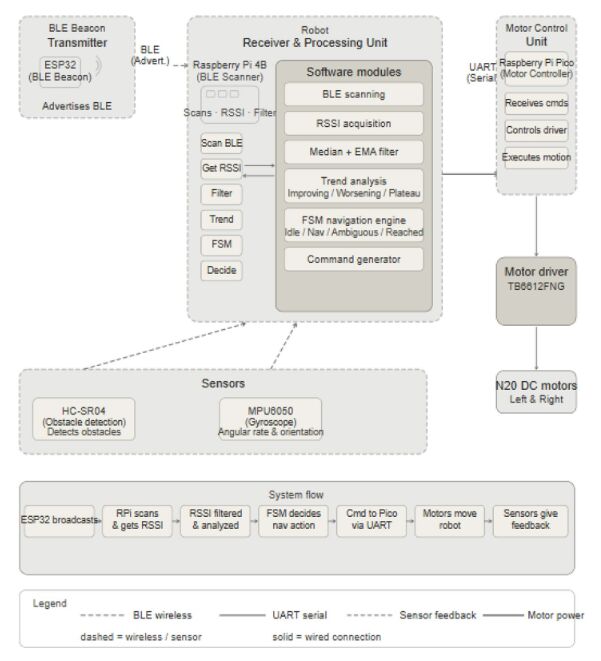
The robot uses Bluetooth signal strength (RSSI) to navigate towards a target. Signal filtering reduces interference, while a finite state machine controls movement and helps the robot recover when signals become unreliable or obstacles are detected. Ultrasonic sensors, a gyroscope and ArUco visual markers provide additional navigation support.
Experimental results showed a 100% success rate across 13 Bluetooth navigation trials, with an average navigation time of 143.4 seconds. However, testing was limited to a controlled indoor environment, and the Bluetooth and vision systems were evaluated separately.
The study demonstrates that inexpensive sensors can support effective indoor navigation.