Bluetooth Framework is a library for using Bluetooth on Windows. There are editions for .NET, c++ and VCL. While the framework has many features, those of particular interest to Bluetooth LE developers are:
Enumerating and managing local Bluetooth radios
Searching for remote Bluetooth enabled devices
Measuring RSSI
Bluetooth LE (BLE) GATT profile client
Monitor Bluetooth LE beacons: Proximity beacon (iBeacon), Alt Beacon and Eddystone Beacons
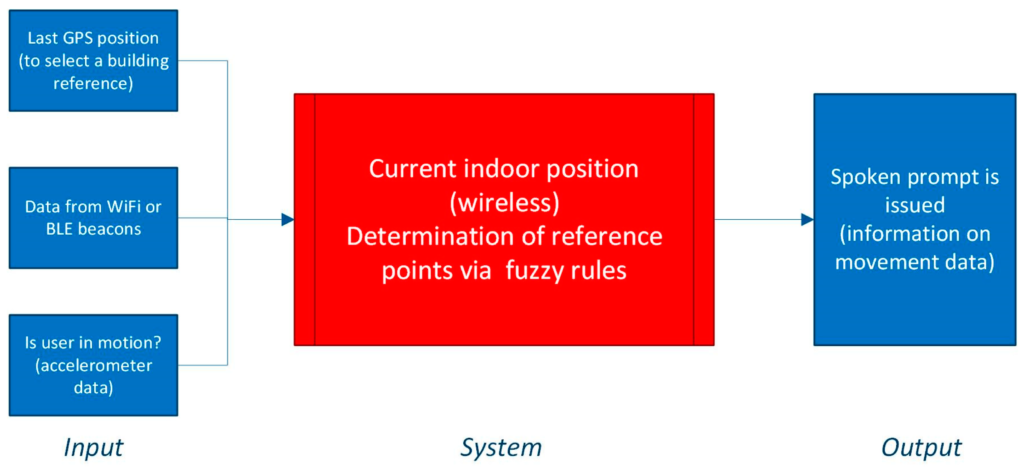
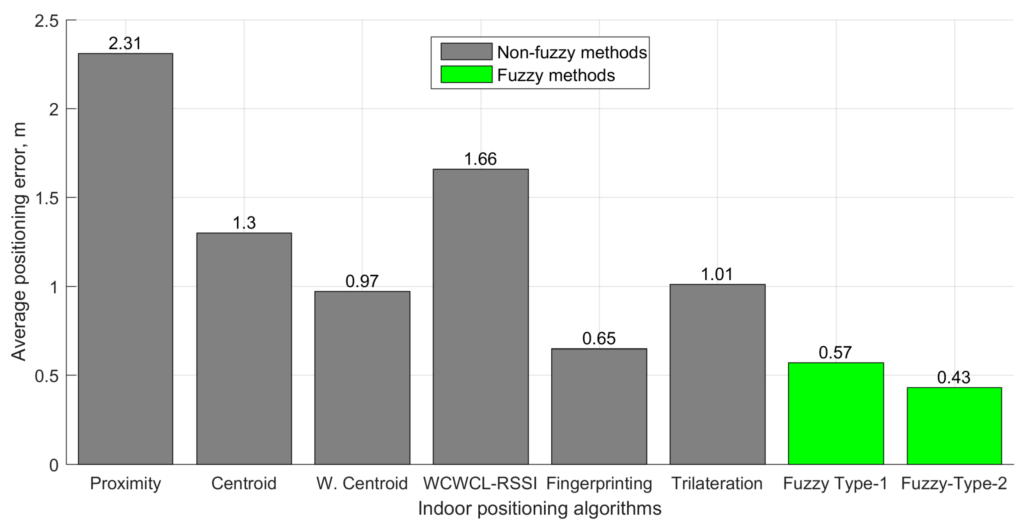
The paper explores indoor location algorithms and implements a fingerprinting system using RSSI that achieves an average error of 0.43m.
The authors’ ‘fuzzy logic type-2’ system allows for complex environments such as buildings with glass/metal corridors. They comment that fingerprinting requires pre-configuration which is one of the main disadvantages of this method.
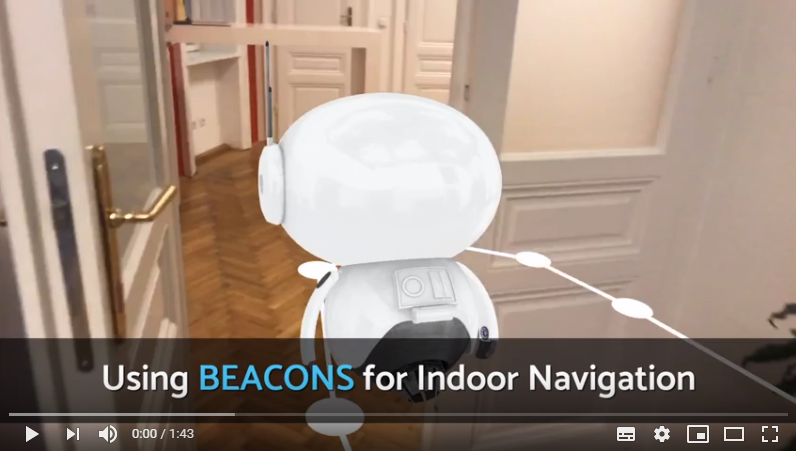
There’s a new video that shows beacons being used with AR to provide up to x10 extra accuracy:
The software being used is ViewAR which provides a platform-independent Augmented Reality system and SDK supporting systems such as ARKit, ARCore, and Wikitude. Contact ViewAR for early beta access.
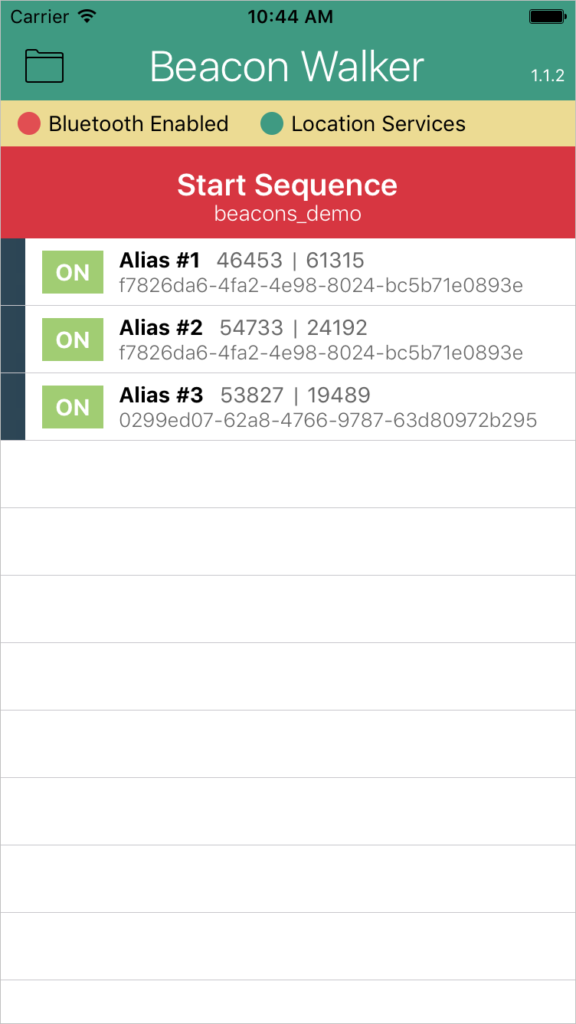
If you are developing a beacon solution it can be tricky to set up physical scenarios where beacons come and go. Peter Alt of Philadelphia Museum of Art has a useful iOS app called BeaconWalker that simulates a sequence of iBeacons with custom durations per beacon.
The Swift source code is also available on GitHub. While you are there also take a look at the museum’s mobile framework, a collection of utilities for caching data, iBeacon ranging and indoor navigation. There’s also framework demo that explains how the framework features work.
Nordic, the manufacturer of the System on a Chip (SoC) in many beacons, has the latest issue of Wireless Quarter Magazine. It showcases the many uses of Nordic SoCs.
News from the world of beacons includes:
Quuppa partnership – this might accelerate Bluetooth direction finding solutions
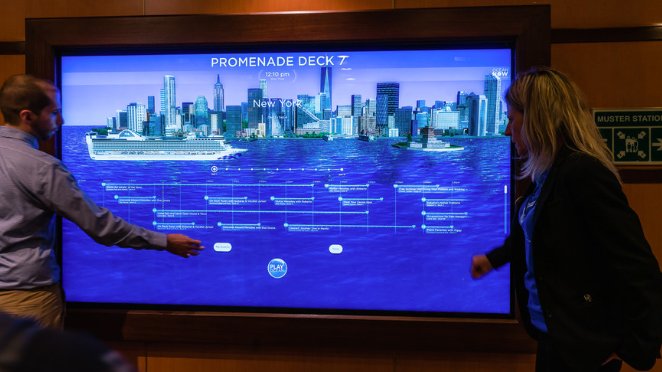
There’s a new in-depth article at PC Mag on how Carnival use beacons, based on Bluetooth and NFC, on cruise ships. As the article says, “it provides an excellent case study in how to use technology to enhance your customer’s experience”.
The beacons are branded as ‘OceanMedallion’ and allow:
Guests to unlock their stateroom
Guests to pay for drinks or items in shops
Guests to play in the casino
Housekeeping staff to keep track of whether or not the stateroom is occupied
7,000 sensors throughout each ship detect the beacons and 4000 interactive portals provide information for guests. A mobile app can also be used that can help navigate about the ship and find fellow passengers.
Beacons provide a way to eliminate friction in the passenger experience. The software system uses edge devices to perform operations close to where the user has been detected so as to reduce latency and network traffic. Nevertheless, the system attempts to centralise data so as not to replicate information.
The system provides Carnival with lots of useful data on guest preferences, transactions (for billing) and preferred areas of the ship. Aggregated information might be used to determine heavily used areas (for maintenance), pinch points and redundant areas of the ship to feed into improvements to the ship.
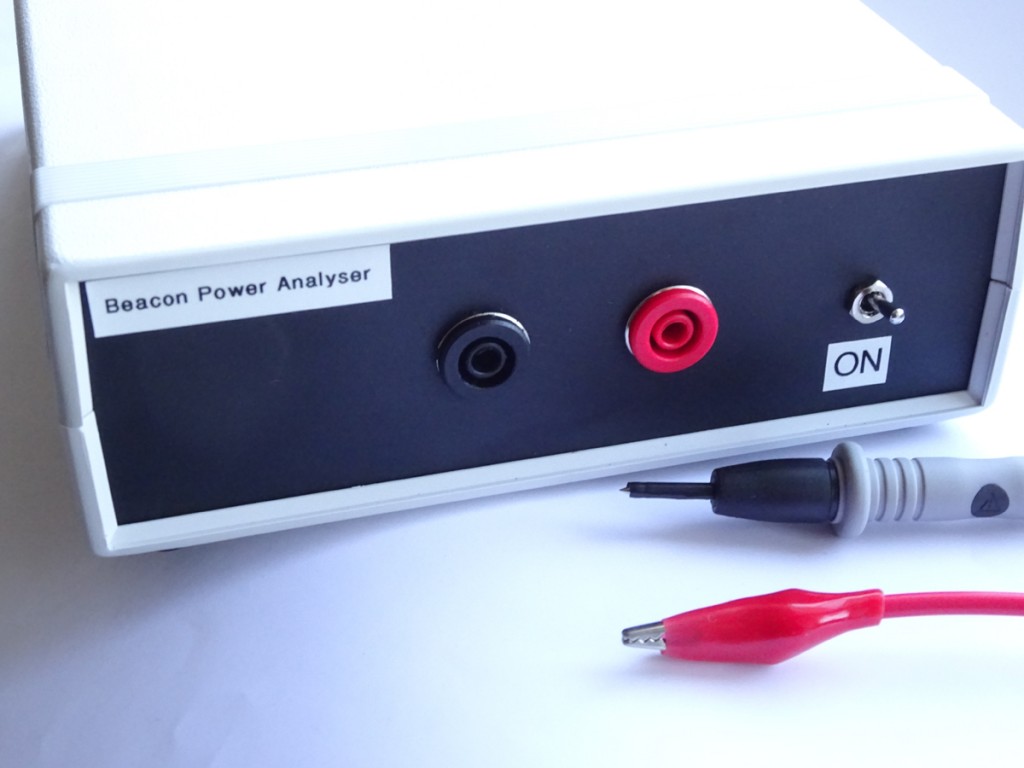
We take a beacon the same as yours, or one you send to us, and measure the actual power use with your specific settings.
Note, however, that if you will be using batteries that have been included with beacons, those batteries will have been used for an indeterminate time in the factory for soak testing the beacon. You will need to use new batteries to obtain the maximum battery life.
The paper explains mesh topologies and routing protocols. It describes Bluetooth:
“BLE is presently raising more and more attention and is becoming one of the leading technologies for both IoT-oriented and industrial scenarios”
The authors provide an in-depth introduction to SIG Bluetooth Mesh. (Note that an excellent higher level overview also very recently became available from InsightSIP). The research paper also mentions other Bluetooth mesh implementations such as the draft IETF Bluetooth Mesh for IPv6.
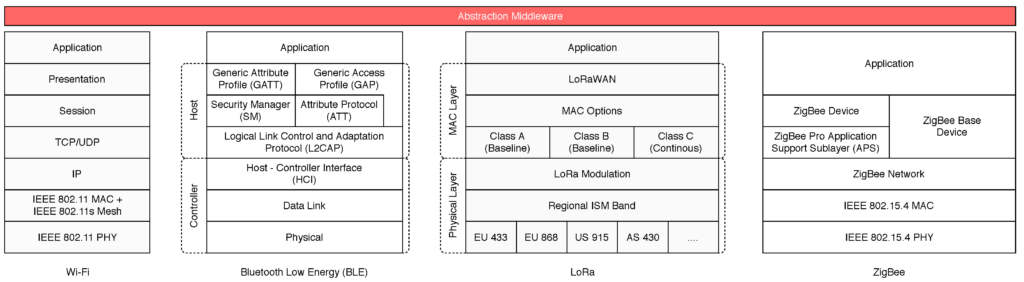
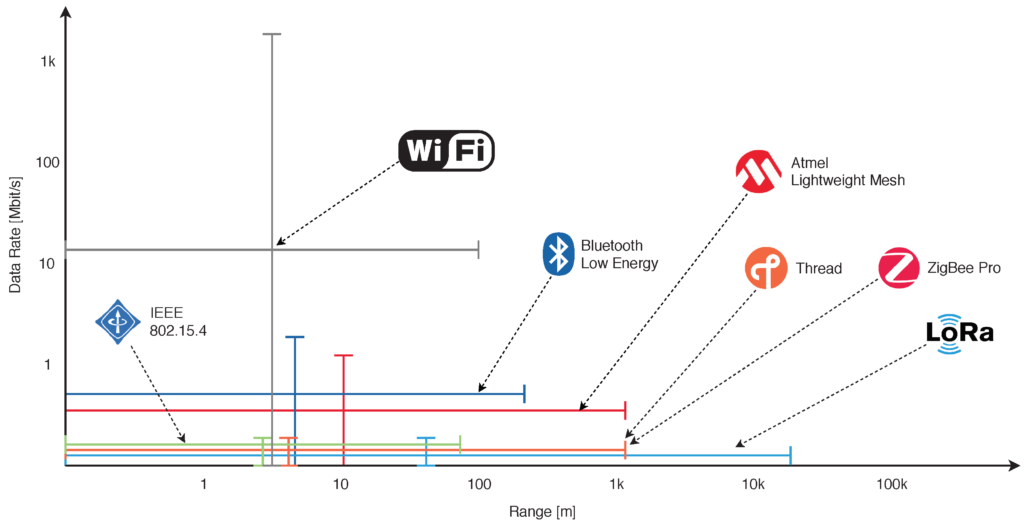
Applications such as smart city, industrial monitoring and smart agriculture are considered and factors such as interoperability and security are mentioned. Finally, the paper compares other protocols such as Thread, ZigBee and LoRaWAN.