
A new paper presents a low-cost system that uses Bluetooth Low Energy beacons to detect when a child enters, remains in or leaves a playground. Each child carries a Bluetooth beacon, while a single smartphone installed at the playground scans the beacon’s signal strength. Entry and exit events are then sent to a server, which issues push notifications to caregivers and creates daily, weekly and monthly activity records.
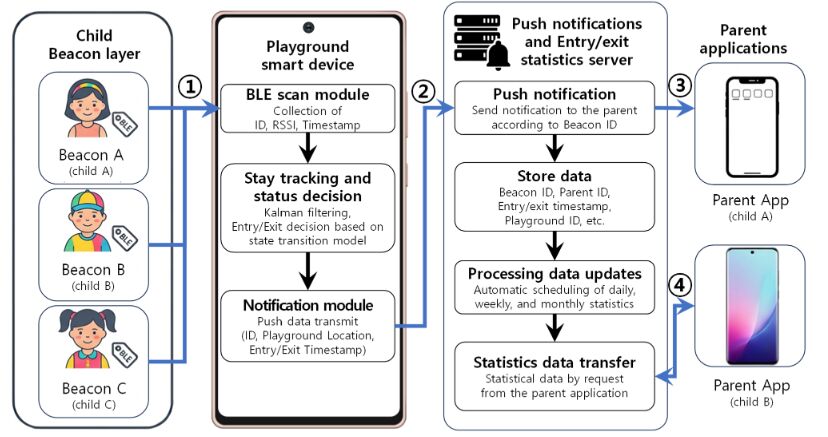
Because BLE signal strength can fluctuate due to obstacles, reflections and movement, the system applies Kalman filtering and time-based thresholds rather than reacting to every change in RSSI. This reduces false alerts near the playground boundary, although it introduces a delay of several seconds and can miss very brief exits followed by rapid re-entry.
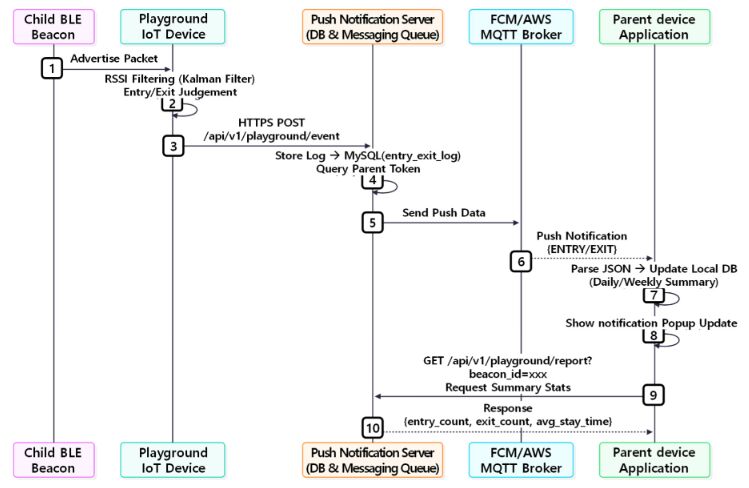
Field tests across five playgrounds reported an average detection accuracy of about 99.2% and an average response time of roughly 6.5 seconds. A separate test with ten beacons detected 39 of 40 events, giving 97.5% accuracy. The results suggest that BLE beacons are effective for simple presence and entry/exit monitoring, but not for precise positioning. Performance may also vary with weather, site layout, crowds and beacon placement.