Bluetooth Beacon-Based Child Boarding and Alighting Detection

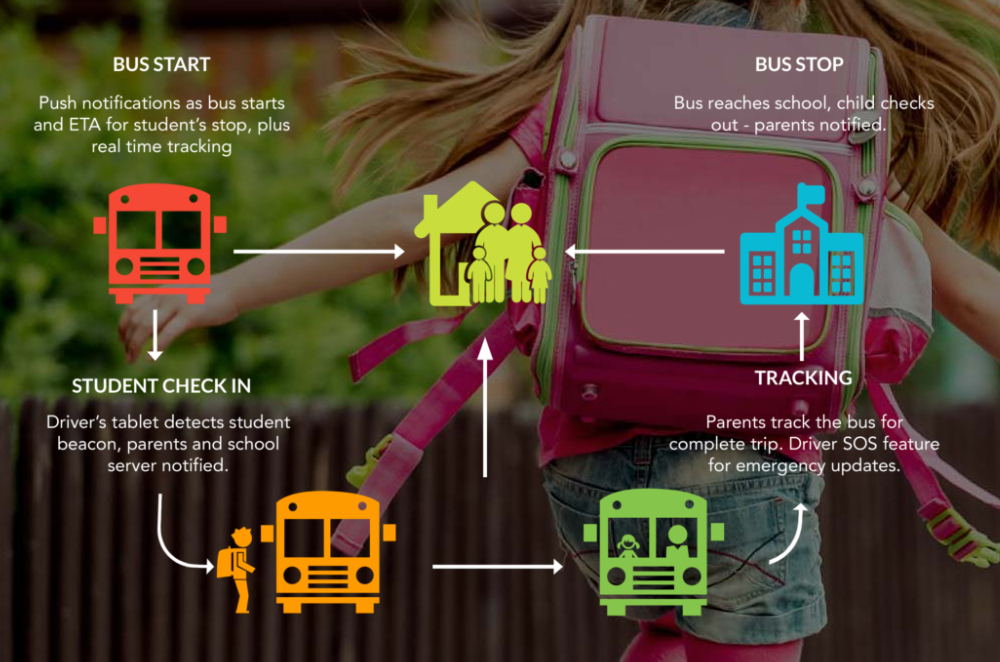
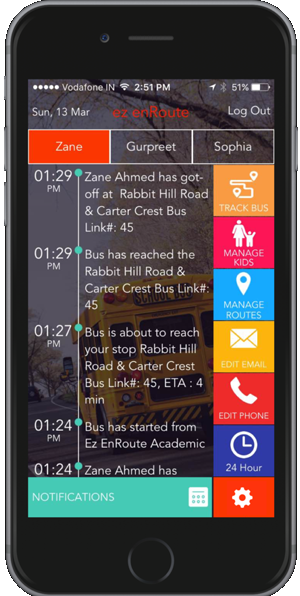
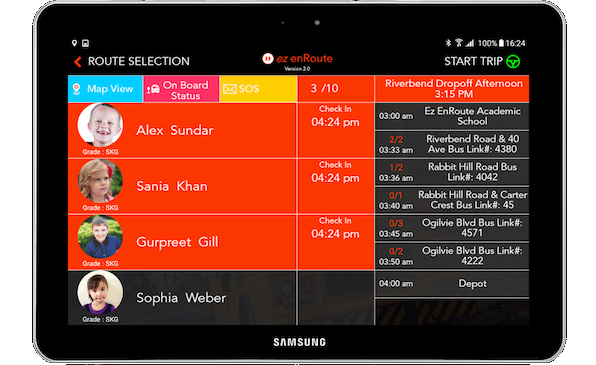
A new study develops a safety system that uses Bluetooth Low Energy (BLE) beacons to detect when a child boards or leaves a school transport vehicle. Each child carries a small BLE beacon, while the teacher’s smartphone or tablet continuously scans for its signal. The system uses the beacon’s unique address to identify the child and then sends the boarding or alighting status to the parent’s phone through a push notification.
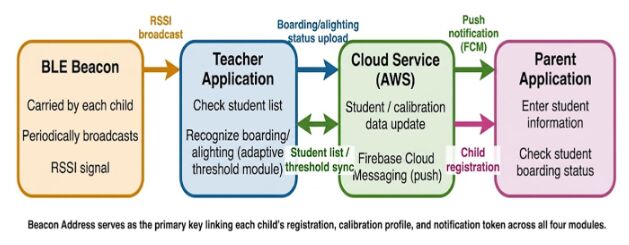

The beacon is used mainly as a proximity sensor rather than for precise positioning. The system measures RSSI, which represents the strength of the Bluetooth signal received by the teacher’s device. A stronger signal generally means the beacon is closer, while a weaker signal suggests it is further away. Because RSSI can fluctuate due to distance, vehicle layout, obstacles and orientation, the researchers do not rely on a single signal-strength threshold. Instead, they analyse ten recent RSSI readings and calculate the average, trend and variance. A lightweight logistic-regression model then decides whether the child has boarded or left the vehicle.

The system was tested in three vehicle sizes. A conventional fixed RSSI threshold worked well within about four metres, but accuracy declined at longer distances. The machine-learning approach improved accuracy from 88% to 94% at 4–5 metres and from 76% to 87% beyond five metres.

Overall, the research shows how simple, low-cost BLE beacons can be used for automatic boarding and alighting detection without modifying the vehicle or requiring the child or teacher to scan or press anything. The main limitation is that Bluetooth signal strength becomes less reliable over longer distances, so vehicle-specific calibration is still required.
Attendance Tracking Using Solar Bluetooth Beacon Badges

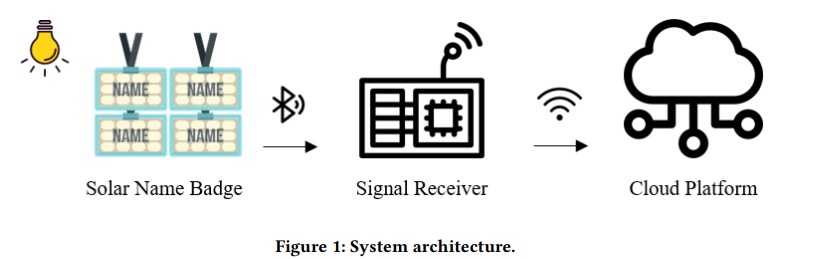
Recent research outlines the design and deployment of an attendance tracking system using battery-free photovoltaic Bluetooth beacon badges. These badges, powered by indoor light, transmit Bluetooth packets to stationary gateways for collection and upload to a cloud-based platform for real-time visualisation. The system addresses issues of environmental sustainability and maintenance by replacing traditional chemical batteries with light-harvesting technology, enabling operation even in low-light conditions (as low as 17 Lux).

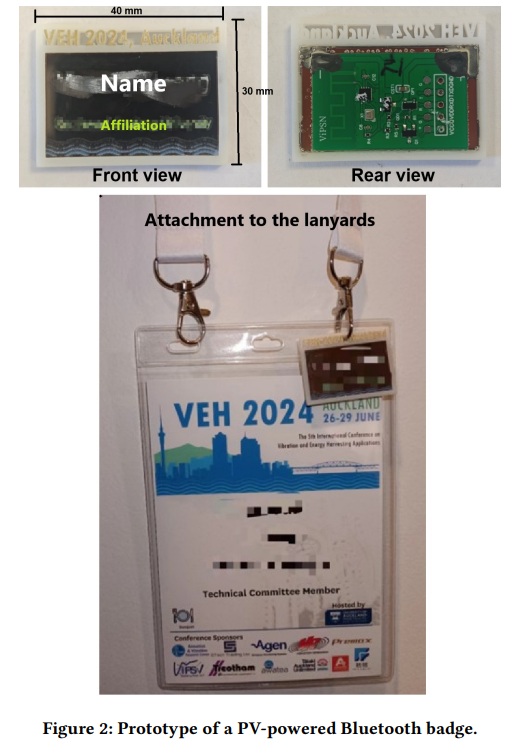
The badges are compact, cost-effective (under $1 each), and incorporate a photovoltaic panel and an energy management circuit. This setup ensures that the devices accumulate and store energy efficiently before broadcasting signals via Bluetooth. Gateways equipped with Bluetooth and WiFi capabilities capture these signals and relay attendance data to a cloud service for analysis. The system’s applications include academic conferences and similar events requiring crowd tracking without privacy concerns associated with cameras or WiFi-based methods.

Field tests during a conference in Auckland validated the system’s functionality, demonstrating effective attendance monitoring in multiple rooms. This innovative approach reflects a move towards environmentally friendly and low-maintenance solutions in the growing field of ambient IoT.

Higher Education Engagement Using Beacons

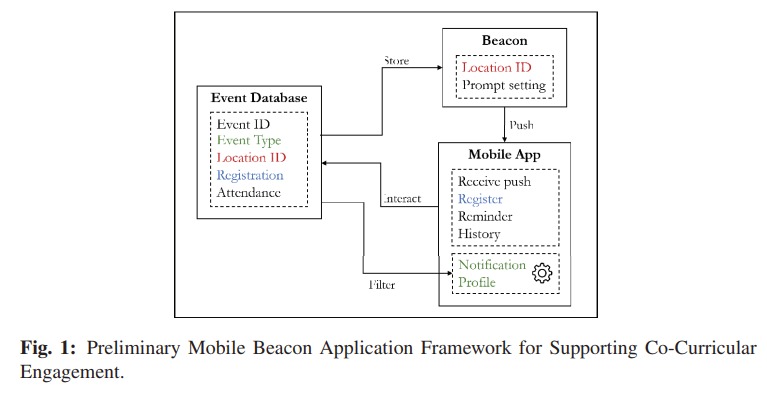
Recent research Preliminary Mobile Beacon Application Framework for Higher Education Co-Curricular Engagement, presents a conceptual framework aimed at enhancing co-curricular engagement in higher education through mobile beacon technology. This technology uses location-based or proximity sensors to interact with users via mobile apps, potentially serving as a powerful tool for engaging students with co-curricular events on campus.

The motivation behind this work stems from the recognition of co-curricular activities’ importance in developing students’ character, alongside traditional academic curricula. The framework proposed seeks to address the challenges of low engagement in such activities due to students missing out on opportunities due to lack of awareness. By integrating mobile beacon technology with personalised notifications, the framework aims to inform students about co-curricular events happening within their proximity on campus, thus enhancing their engagement and participation.

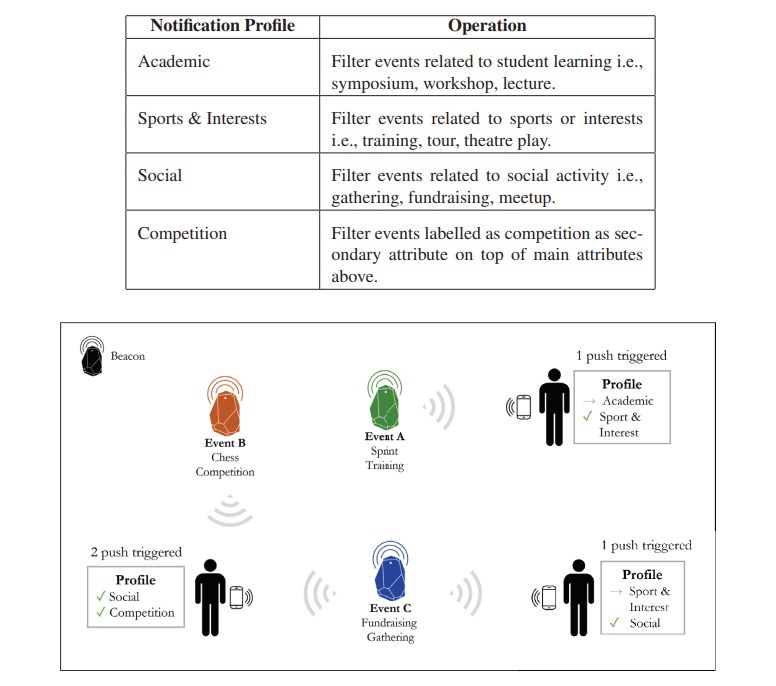
A preliminary conceptual framework is detailed, focusing on the design and application of mobile beacon technology integrated with personalised notification features to support co-curricular engagement. This framework outlines the components necessary for developing such an application, including beacon devices, mobile apps, event databases and notification profiles. The document elaborates on the characterisation of these components and the processes involved in deploying and interacting with the beacon technology to deliver personalized and relevant co-curricular event notifications to students.

The document concludes by discussing the development of a prototype application based on the framework, using the Flutter framework for cross-platform mobile app development and the integration of beacon technology for real-time event notification.

Automatic Attendance Tracking in Education

Advantages of using Bluetooth beacons for automatic attendance tracking in education include:

  • Improved accuracy: Bluetooth beacons can accurately detect the presence of students in the classroom, reducing the likelihood of errors in attendance tracking.
  • Time-saving: Automating attendance tracking with Bluetooth beacons can save time for teachers and administrative staff, as they do not need to manually record attendance.
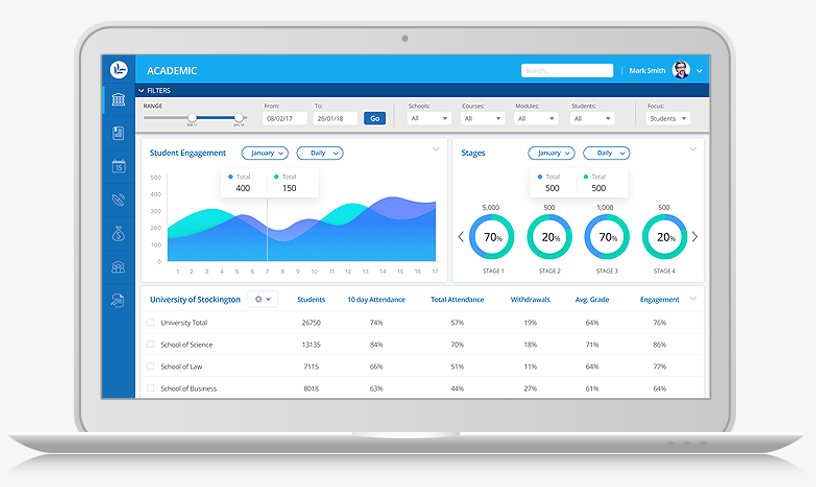
  • Real-time tracking: Bluetooth beacons can provide real-time attendance tracking data, allowing teachers and administrative staff to monitor attendance in real-time.
  • Safety and security: Alerts can be provided when students enter prohibited areas.

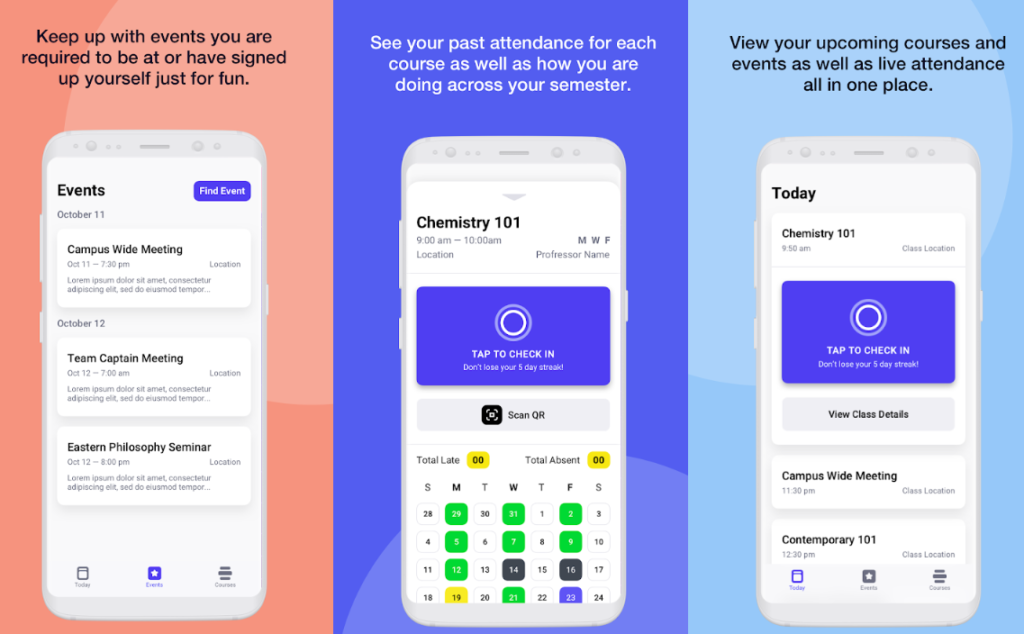
Bluetooth beacons can be used for automatic attendance tracking in education by placing them in the classroom or lecture hall and configuring them to detect the presence of students’ Bluetooth-enabled devices such as smartphones or tablets. When a student enters the range of the beacon, the beacon sends a signal to their device, which can then be used to record their attendance. The main problem with this setup is that students might accidentally disable detection. Not all smartphones/tablets work the same and there can be incompatibilities and the requirement for high levels of support. Also, a detection app needs to be created and distributed. The scanning for beacons can also reduce smartphone/tablet battery life.

An alternative setup is to have the students carry the beacons and use gateways to detect attendance. Data is set to a server running software such as BeaconRTLS™ or BeaconServer™. Attendance reports can run against the historical RTLS data.

Bluetooth Beacon Based Student Registration System

The Journal of Physics has new research into a Student Attendance Manager Using Beacons and Deep Learning (pdf).

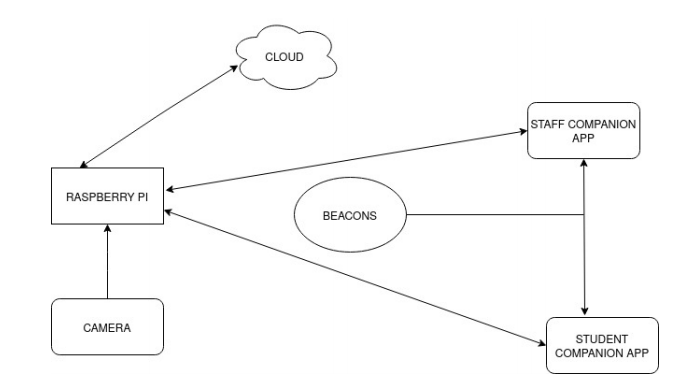
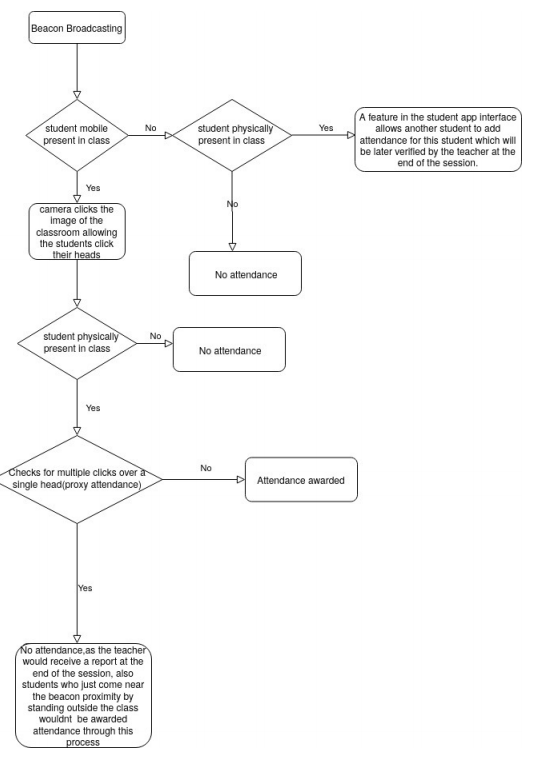
The system automatically registers attendance without disturbing the class. It uses an iBeacon in each classroom to determine location. It also uses a camera and deep learning analysis to prevent students cheating the system by having someone else attend. The researchers say the system is better than biometric scanning and RFID that requires manual reading one by one.

The solution uses iBeacons but it’s the Bluetooth MAC address that’s used for room identification. The scanner and camera interface uses a Raspberry Pi that sends data to a server.

Read about Beacons in Education

iBeacons for Learning

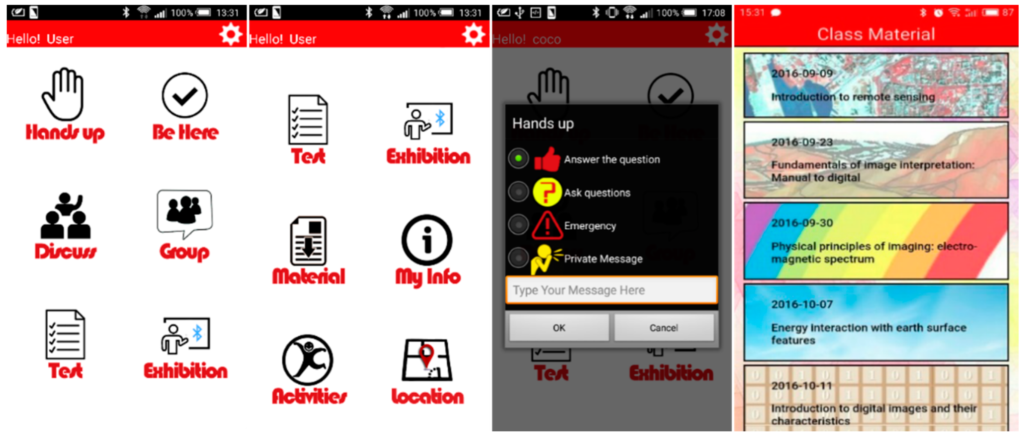
There’s new research Exploring Bluetooth Beacon Use Cases in Teaching and Learning: Increasing the Sustainability of Physical Learning Spaces that reviews selected use cases of Bluetooth beacons in educational situations.

The paper covers attendance monitoring, smart campus operation, dissemination of educational content to students and the use of augmented reality (AR) combined with beacons.

App iClassPolyU used for research

Read about Beacons in Education

Student Attendance Monitoring with iBeacons

SEAtS Software, a student attendance monitoring solution has a new article that takes a look at options for implementing student attendance monitoring. It compares using iBeacons, mag stripe card readers, GPS, WiFi and QR codes.

SEAtS Attendance Monitoring Using iBeacons

The article concludes that iBeacons are best because they are easy to install, provide the best accuracy, are affordable, easy to use and reduce administration time.

Read about Beacons in Education